The HOA Board Demolished My Family’s 1793 Dam — So I Let the River Do the Talking
The HOA Board Demolished My Family’s 1793 Dam — So I Let the River Do the Talking
The new development next door decided my family’s private reservoir should be public property.
They filed a court order demanding the removal of an 11-million-gallon water hold.
They had no idea they were trying to demolish the only thing keeping their 84 homes dry.
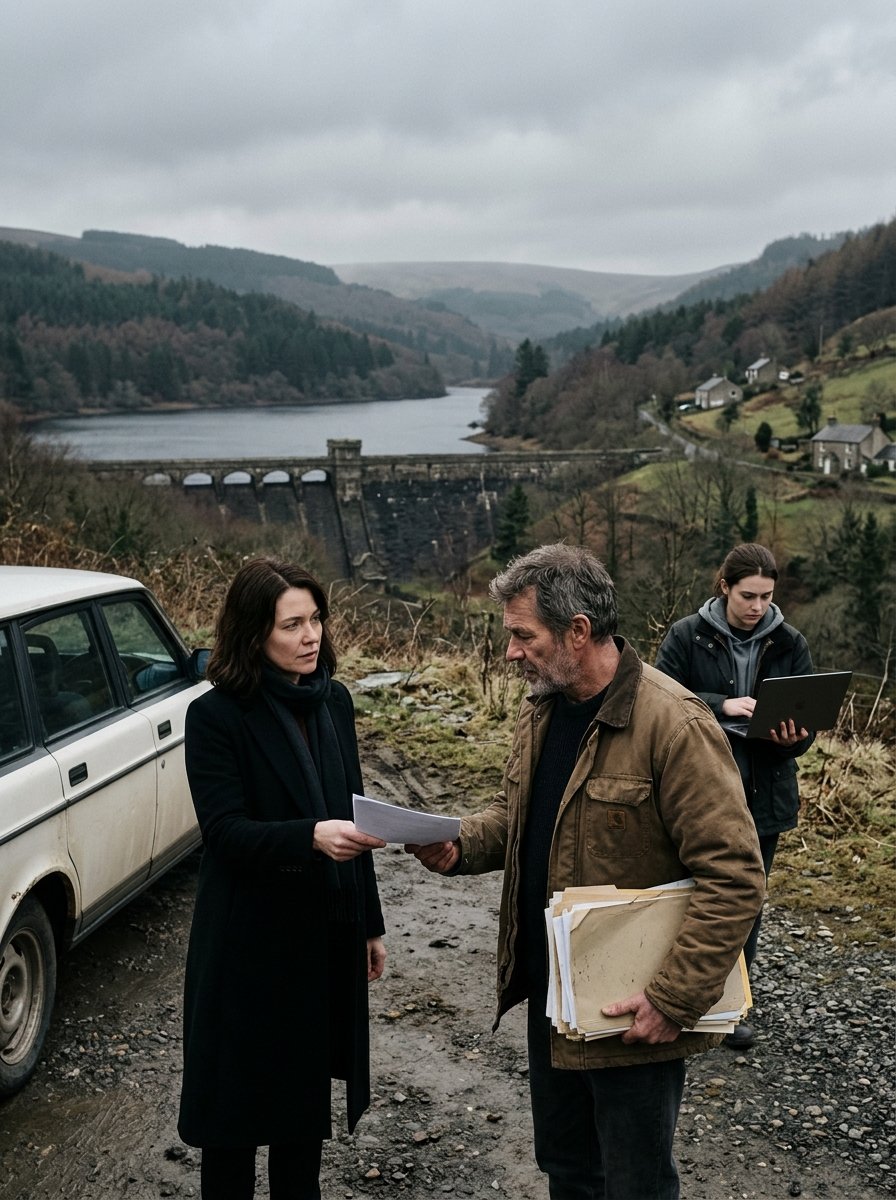
She pulled up in her white SUV, handing me a court mandate with a smug smile.
That was when I stopped explaining and started documenting.
I had my 283-page environmental assessment and the state engineering certifications.
And I started letting her build the case against herself.
PART 1
My family built the stone dam across the Branch River in 1793. I spent the last 28 years of my life as a state dam safety engineer making sure structures just like it didn’t fail.
Then an HOA president from Connecticut decided my dam was in her way.
Her name was Heather Lynn. She was the president of Cascade Meadows Estates, an 84-home subdivision built in a low-lying valley directly below my 180-acre property.
She drove a white luxury SUV, wore pearls to the local hardware store, and firmly believed that living in a rural area meant reshaping it to look like a park.
It started with a piece of paper taped to my gate. It was an invoice for $400. The HOA had passed a new bylaw requiring anyone who “”benefited from community water features”” to pay an annual assessment.
I didn’t live in the HOA. My dam wasn’t a community feature. It was private property that my ancestors literally built by hand.
I returned the invoice. She sent it back with a threat. I ignored it. She took me to small claims court. The judge laughed her out of the room.
That was when Heather went nuclear.
She and her husband retained an aggressive Burlington law firm. They petitioned the Vermont Environmental Court to forcefully demolish my dam, claiming it was an unpermitted nuisance that was hoarding public waters.
I pulled the state business filings. I quickly found out this wasn’t just about a stubborn HOA president. Heather’s husband had quietly registered an LLC eight months earlier. He had been filing inquiries with the regional planning commission about developing the dry riverbed land that would be exposed if my dam was ever removed.
They weren’t trying to free a river. They were trying to steal land to build more houses.
I called my daughter, Maren, who studies hydrology at the university. She came home, and we spent the weekend modeling the valley.
“”Dad,”” she said, tapping her laptop screen. “”The dam holds back 11 million gallons. If it’s removed before the spring snowmelt, peak discharge moves downstream immediately.””
“”It hits the subdivision,”” I said.
“”The whole thing,”” she confirmed. “”The bowl fills first. If there’s a heavy rain event on top of the snowmelt, they get five feet of water in their living rooms within 24 hours.””
I drafted a massive 283-page response filing. It included certified copies of every state permit my dam held, and a highly detailed hydrological model showing exactly how fast Cascade Meadows Estates would drown if the dam came down.
At the court hearing, Heather sat smugly with her high-priced lawyers. They paraded in an “”expert”” engineer who completely ignored the concept of peak discharge.
I took the stand. I gave the judge my credentials as the state’s former Chief Dam Safety Engineer.
“Your Honor,” I said clearly for the court record. “Removing this structure in the spring runoff season will cause a catastrophic flood of the 84 homes downstream. I have kept that valley dry for 28 years.”
The judge, leaning heavily into a misguided interpretation of environmental restoration laws, overruled my warning. She ordered me to demolish my own dam within 90 days.
Heather beamed. Her lawyers shook hands. They thought they had outsmarted the local rural guy.
I walked out of that courthouse into the cold March air. I looked at my daughter, handed her the 283-page hydrology report, and made my decision.
I wasn’t going to fight the court order anymore. I was going to tear my own dam down just in time for the spring snowmelt. And I was going to let the river teach HOA Karen the one lesson she refused to learn.
Maren did not take the report.
Her fingers stayed curled around the strap of her laptop bag while sleet clicked against the courthouse steps.
“Dad,” she said quietly, “tell me you don’t mean you’re going to let eighty-four families drown because a judge refused to listen.”
Through the glass doors behind us, Heather was still laughing with one of her attorneys. Her husband stood beside her with his phone out, already talking to somebody about acreage he believed would soon exist where eleven million gallons of water currently sat.
“No,” I said. “Nobody drowns.”
Maren’s shoulders loosened slightly.
“But I’m done protecting them from consequences in silence.”
I handed her the report.
“Every warning goes on paper now. Every agency gets a copy. Every homeowner gets a map. Every decision gets a signature. If they still demand demolition, they can explain it with the river rising behind them.”
That was the moment the fight changed.
By eight the next morning, certified packets were moving to the Department of Environmental Conservation, state dam safety, county emergency management, the sheriff, the environmental court, and all eighty-four homes in Cascade Meadows.
Each homeowner received a one-page summary and a flood-depth map.
Removal of Rowan Dam during spring runoff will materially increase flood risk to your property.
No threats.
No rhetoric.
Just the same numbers I had given under oath.
Heather responded before lunch. She posted on the HOA portal that my warnings were “an intimidation campaign by a disgruntled landowner.” She called my model self-serving speculation and told residents the court had already determined that the dam was an environmental nuisance.
Maren read it at my kitchen table.
“She’s telling them not to take the maps seriously.”
“I know.”
“Aren’t you furious?”
I placed the sheriff’s signed delivery receipt into a binder.
“It makes me careful.”
For the next seven weeks, careful became our life.
We photographed the reservoir level every morning. We logged snowpack. We installed two extra stream gauges. Maren built a live discharge model. I hired an independent demolition contractor and designed a phased drawdown that could be stopped if downstream conditions became unsafe.
The foreman, Luis Ortega, read the court order twice.
“You really require evacuation before the final breach?”
“Yes.”
“Even after these people sued you?”
“They didn’t all sue me.”
That mattered.
Heather had turned a property dispute into a personal war, but the people below us were nurses, teachers, retirees, mechanics, parents. Most had bought homes from glossy brochures and assumed someone had checked the water.
The first resident to come to my gate was Paul Dorsey from Juniper Lane.
He arrived at dusk holding my map folded into quarters.
“My daughter’s room is here,” he said, touching a blue band marked four to five feet. “She’s six.”
I nodded.
“Heather says you invented this.”
“I didn’t.”
“Can you prove it without making me read two hundred eighty-three pages?”
Maren projected the terrain model on the barn wall. When the simulated breach reached its fourth hour, blue water spread across Juniper Lane and climbed through the first floor of Paul’s house.
He sat down on an overturned bucket.
“She knew?”
“I warned her in court.”
“That’s not what I asked.”
I looked at him.
“I don’t know what she knew before court.”
By mid-May, forty-three residents had come to see the model.
Heather tried to fine them for “unauthorized coordination with an adverse property owner.”
Then her attorney sent me a letter demanding that I remove the evacuation requirement because it would “create unnecessary panic and interfere with association property values.”
I read that sentence twice and filed it.
Maren caught the edge of a smile on my face.
“You’re enjoying this.”
“I’m appreciating good documentation.”
The demolition date arrived on May 27.
At five thirty that morning, the temperature was already fifty-eight degrees. Mist hung over the reservoir. The old stone dam looked black with moisture beneath a pale spring sky.
State inspectors arrived at six. Luis brought two excavators, pumps, and rock. County emergency management parked a command trailer on the high road above Cascade Meadows. The sheriff closed the lower lane.
By seven, most residents had moved vehicles uphill.
Heather had told them evacuation was optional.
The county told them it wasn’t.
At seven fifteen, her white SUV rolled in.
Pearls. Cream coat. Dark sunglasses.
Her husband stepped out with a leather portfolio.
Heather walked straight toward me.
“You’ve turned this into theater.”
“I turned it into a documented demolition.”
“The court said remove the dam.”
“And I’m complying.”
“Then why are there police here?”
“Because eleven million gallons of water are not landscaping.”
Her husband leaned toward her and muttered, “Get the wall open before they can reconsider.”
Maren heard it.
So did I.
At eight, Luis made the first cut, not through the stone face but through the controlled auxiliary channel I had designed years earlier. Brown water began sliding toward the Branch River in a narrow ribbon.
The reservoir dropped exactly as projected.
At nine seventeen, Maren came toward me quickly with her tablet.
“Dad.”
I knew from her face.
“The north ridge is six degrees warmer than forecast. Melt rate just jumped twenty-eight percent.”
I looked toward the mountain. Sun had broken through and struck the upper snowpack in hard white bands.
“What’s our margin?”
“If the storm comes on schedule, thin. If it arrives early, none.”
I called Luis.
“Pause excavation.”
The excavator bucket stopped in the air.
Heather was beside me almost immediately.
“What are you doing?”
“Conditions changed.”
“You have a court order.”
“I also have a safety obligation.”
Her husband opened his portfolio. “We’ll seek contempt.”
“Do it.”
Then a black pickup came fast up the access road and braked behind the sheriff’s cruiser.
Paul Dorsey got out.
An older woman climbed out after him.
Elaine Porter, the HOA treasurer.
She carried a red accordion folder against her chest.
Heather’s face changed.
“Elaine. What are you doing here?”
Elaine walked past her.
“I need somebody official to see these.”
Heather moved toward the folder.
The sheriff stepped between them.
“Ma’am, stay where you are.”
Elaine’s hands were shaking so badly that Maren helped her open it.
Inside were meeting minutes, printed emails, engineering attachments, and a recorded drainage covenant from the original Cascade Meadows subdivision approval.
The first page stopped me cold.
ROWAN DAM UPSTREAM ATTENUATION DEPENDENCY.
The subdivision had been approved on the assumption that my dam would remain operational. Without it, the lower basin did not meet the county’s one-hundred-year flood standard.
The developer had been required to disclose that dependency when control of the association transferred to residents.
Elaine turned to the signature page.
Heather Lynn.
Four years earlier.
She had signed an acknowledgment that the HOA had received the drainage covenant, the flood model, and the upstream dependency notice.
Maren stared at her.
“You knew before you ever sent my father that first four-hundred-dollar invoice.”
Heather’s lips parted.
“That document doesn’t mean what you think.”
Elaine pulled out three printed emails.
“I kept these because she told us to delete old board correspondence after the lawsuit started.”
The first was from Heather:
If Rowan is forced to remove the structure, the reservoir line will retreat substantially. We should avoid discussion of downstream risk until after the nuisance petition is resolved.
The second was from her husband:
Once the court order is final, my LLC can move on the exposed parcels. We need the HOA publicly aligned with environmental restoration, not flood control.
The third was written after I filed my 283-page report.
Heather had sent it to her attorney and copied her husband.
His numbers are probably right, but once the dam is down the political reality changes. No judge is going to make us put it back.
Nobody spoke for several seconds.
Even the excavator sounded far away.
Paul stared at Heather.
“My daughter sleeps on Juniper Lane.”
“This is being taken out of context,” she said.
“You told me his map was fake.”
“I said it was advocacy.”
“You told us there was no flood risk.”
Elaine’s voice cracked.
“You told us to vote down emergency reserves because demolition would increase our property values.”
Heather spun toward her. “You were part of those meetings.”
“I was.”
Elaine wiped beneath one eye.
“And I was a coward. I kept telling myself this was a fight between property owners. Then I saw the inundation map. Then you ordered me to delete the emails. Last night I looked at my grandson asleep upstairs and realized I was helping you gamble with other people’s children.”
Heather’s husband pointed at the folder.
“Those are privileged records.”
“No,” I said. “Those are evidence.”
For the first time since this began, his confidence vanished.
Maren photographed every page and sent the files to the state inspector, county emergency director, sheriff, and court clerk.
At nine forty-two, the environmental court convened an emergency telephone hearing from the command trailer.
Rain began tapping on the metal roof.
The judge asked Elaine three questions.
Had Heather received the drainage covenant?
“Yes.”
Did the HOA possess engineering material identifying Rowan Dam as a critical flood attenuation structure?
“Yes.”
Had those documents been disclosed during the nuisance case?
“No.”
Heather’s lead attorney closed his eyes.
The judge asked him, “Counsel, were you aware of these documents?”
He looked at Heather.
Then at her husband.
“No, Your Honor.”
The silence afterward sounded like a door locking.
The judge stayed her demolition order immediately and referred the record for sanctions review and investigation of possible fraud upon the court.
Then she addressed me.
“Mr. Rowan, maintain the structure in the safest condition possible.”
I looked through the trailer window.
The reservoir was rising.
“We already opened the auxiliary channel.”
“Can it be closed?”
“Not instantly.”
“How much danger?”
Maren turned her screen toward me. The storm line had accelerated.
“If we move now,” I said, “we can keep the subdivision dry.”
The judge’s voice softened.
“Then do what is necessary.”
I stepped outside.
Heather followed me into the rain.
“You wanted this,” she said.
“No.”
“You wanted to humiliate me.”
“No.”
“You dragged cameras here and staged this entire disaster.”
I pointed toward the valley.
Eighty-four roofs sat below us beneath the gray sky.
“Those people are the reason you’re standing here arguing instead of watching water come through their windows.”
Her face tightened.
“You think you’re a hero?”
“No.”
I took one step closer.
“I’m the man who warned you.”
She had nothing left to say.
For the next four hours, nobody cared about lawsuits.
Luis reversed the equipment and rebuilt the drawdown berm. State crews dumped rock into the auxiliary channel. Firefighters laid temporary barriers along the lower road. Residents who had spent months calling me selfish carried sandbags beside me.
Paul hauled plywood.
Elaine directed families uphill.
A retired carpenter brought his tractor.
By noon, the Branch River was six inches below the lower-road trigger.
Then rain came down in a solid gray curtain.
The auxiliary channel was still releasing too much.
Maren found me at the stone face.
“We need the west spillway.”
It had not been fully opened in forty-one years.
“If the gate sticks—”
“It won’t.”
“You don’t know that.”
“No,” she said. “But you rebuilt the hinge assembly in 2008, and I inspected the shaft last summer.”
Despite everything, I almost smiled.
“You inspected it?”
“You raised me.”
We climbed the wet stone steps together.
The iron wheel fought us.
Rust flaked beneath my gloves.
Maren braced one boot against the wall.
“Again.”
We pulled.
The wheel turned.
Deep below us, metal groaned.
Then water burst through the west spillway in a white sheet and curved into the old flood meadow instead of toward Cascade Meadows.
The downstream gauge stopped climbing.
For three minutes it held.
Then it dropped one tenth of a foot.
Another tenth.
Maren covered her mouth.
I leaned against the stone and closed my eyes.
No one cheered.
People were too wet, too tired, too aware of how close numbers on a page had come to becoming bedrooms, photographs, pets, and lives beneath muddy water.
Then Paul laughed once.
It was not joy.
It was the sound of fear finally releasing him.
By evening, the rain weakened.
Cascade Meadows stayed dry.
The lowest cul-de-sac took water across the pavement. Two garages got wet.
No living room flooded.
No one was hurt.
State investigators escorted Heather and her husband from the command area separately.
She passed within ten feet of me.
Her pearls were gone. Her hair was pasted to her face.
For a second, I thought she might speak.
Instead she looked at the dam, then at the houses below, then at Elaine.
Elaine did not look away.
Heather lowered her eyes and walked on.
The legal collapse followed.
The court permanently vacated the demolition order. Its written ruling said material omissions had prevented a proper evaluation of public safety.
Heather and her husband became subjects of a state fraud investigation. His development LLC lost its financing. The regional planning commission froze his applications. The HOA insurer opened a coverage investigation over concealed flood-risk documents.
Heather’s attorneys withdrew and stated that they had never been shown the covenant or the private emails.
Her husband was later charged over false statements in the development filings.
Heather entered a plea related to evidence concealment and false sworn declarations. The civil settlement barred her from serving on another homeowners association board in the state.
The LLC dissolved.
The project died.
But that night, sitting on my porch, none of it felt like victory.
Maren came outside with two mugs of coffee and sat beside me.
“You scared me outside the courthouse,” she said.
“I know.”
“I thought you were angry enough to let it happen.”
I watched steam curl from the mug.
“For maybe ten seconds, I was.”
She turned toward me.
“I wanted Heather standing in five feet of water holding that court order. I wanted her to see exactly what she had demanded.”
Maren stayed quiet.
“That frightened me more than the storm.”
“What stopped you?”
I looked toward the black line of the river.
“Your mother.”
Maren’s expression changed.
Her mother had been gone nine years.
“She used to say being right doesn’t give you permission to become cruel.”
Maren looked down at her coffee.
“She would have liked your evacuation maps.”
I laughed softly.
“She would have corrected my punctuation.”
Maren laughed too, but the sound broke in the middle.
I put an arm around her.
We sat beneath the porch light and cried for a woman who was not there, for an old dam that had nearly been turned into a weapon, and for the relief of having saved people who might never understand how close they came to losing everything.
A week later, the residents held a meeting in the fire hall.
Seventy-six households came.
Elaine stood at the front.
She had resigned as treasurer.
“I’m not asking anyone to forgive me,” she said. “I signed minutes I should have challenged. I accepted explanations because challenging them was uncomfortable.”
She looked at me.
“When the truth became undeniable, Mr. Rowan still protected my house.”
Her voice trembled.
“I’ll spend a long time understanding that.”
Then Paul stood.
“I called you a liar in the grocery store.”
“Yes,” I said.
“In front of my daughter.”
He swallowed.
“I’m sorry.”
There are apologies that are really negotiations.
That one wasn’t.
“I accept it.”
Others spoke.
Some apologized.
Some asked questions.
Some could not meet my eyes.
I did not need them all to like me.
I needed them to understand the water.
So Maren and I spent two hours teaching hydrology in a fire hall.
Near the end, an elderly man named Thomas Wren approached carrying a thin wooden box.
“I think this belongs to your family.”
Inside were brittle letters tied with faded blue ribbon.
“My grandmother kept them,” he said. “Her grandfather lived in the lower valley during the flood of 1927.”
I recognized the handwriting on the first letter from old family papers.
It was addressed to my grandfather, Samuel Rowan.
Thank you for holding the upper water when the Branch rose. Without your wall, we would have lost the schoolhouse and every home along the meadow road.
There were more.
Farmers had contributed timber to reinforce the dam.
Shopkeepers had sent money.
Families had brought food to men repairing the spillway.
At the bottom lay a handwritten agreement dated November 1927.
It gave my family a permanent right to maintain the dam and reservoir in exchange for a promise to manage spring runoff “for the protection of the lower meadow.”
Twenty-three families had signed it.
Among the surnames were Dorsey, Porter, Bell, and Wren.
Maren looked across the room.
Their descendants were sitting twenty feet away.
That was the truth none of us had known.
Heather had spent two years telling the subdivision that my family was hoarding water from them.
The truth was that for generations, my family had been holding water for them.
Private stone.
Shared safety.
The room remained silent after I read the agreement aloud.
Paul wiped his face.
“My great-grandfather signed that.”
“Yes.”
Elaine whispered, “So did mine.”
Thomas closed the box.
“What happens now?”
I looked at Maren.
“I’m done carrying it alone.”
Over the next six months, we created the Branch River Watershed Trust.
I granted a permanent flood-control easement around the dam and spillways. The land and reservoir remained in my family, but the dam’s safety role became formally protected.
Cascade Meadows voted to contribute annually to inspections and maintenance.
The state funded a modern emergency gate.
The county installed warning sirens and a public stream gauge.
Maren became the trust’s first technical director.
Settlement money from the former HOA leadership repaired the eastern stone face and restored the old flood meadow.
Nobody built houses in the dry riverbed.
We planted willow instead.
The following spring arrived slowly.
On the first warm Saturday in May, residents came uphill carrying shovels, gloves, coffee, children, and too many baked goods.
Paul’s daughter Sophie wore pink rubber boots.
She pointed at the spillway.
“Is that the part that saved my room?”
“That part helped.”
“Then we should paint it pink.”
“No.”
She planted both hands on her hips.
Maren crouched beside her.
“We might negotiate a small sign.”
I walked away before I lost the argument.
By afternoon, the valley smelled of wet soil and cut grass.
Luis had brought his family.
Elaine worked beside Paul.
Children ran along the high path.
Healing did not make everyone friends.
It did not erase what people had done.
It simply gave them somewhere honest to stand.
Near sunset, Maren and I climbed to the center of the dam.
Below us, Cascade Meadows glowed in amber light.
A dog barked.
A screen door slammed.
Someone was grilling.
Ordinary sounds.
The kind you never understand as precious until you have seen a flood map cover them.
“You know what I keep thinking about?” Maren asked.
“What?”
“That day outside the courthouse. You said you were going to let the river teach them.”
“I remember.”
She watched clear water fold over the stone.
“It did.”
I shook my head.
“No. We did.”
She looked at me.
“The river just made sure everybody listened.”
Then she slipped something into my hand.
A small brass plaque.
One sentence had been engraved across it.
For the protection of the lower meadow.
My throat tightened.
“Where does this go?”
“Beside the west spillway wheel.”
I rubbed my thumb over the words.
“Your mother would say it needs a comma.”
Maren smiled.
“She would.”
We fixed it to the stone the next morning.
Not near the entrance.
Not where cameras would see it.
Down beside the old iron wheel, where anyone opening the spillway would have to put a hand beside those words.
Years later, that was still what I remembered most.
Not Heather’s white SUV.
Not the court order.
Not the cameras.
Not even the flood.
A small brass sentence beside an iron wheel.
Heather had believed ownership meant control.
Her husband had believed law meant leverage.
The court had believed restoration could be ordered without understanding the landscape.
For ten dangerous seconds, I had believed being right entitled me to let consequences speak for me.
The river corrected all of us.
On quiet mornings, I still walk the dam before sunrise.
I check the gauges.
I listen to the spillway.
Sometimes I can hear Cascade Meadows waking below.
A garage door.
A school bus.
A child calling for a dog.
And when spring comes hard and the reservoir rises against the wall, I no longer think of the water as something my family owns.
I think of it as something we have been trusted to hold.
The river still talks.
But now, finally, everyone in the valley knows how to listen.