×
On Christmas Eve, my parents handed me one pre-packed bag, blocked me from going upstairs for the rest of my belongings, and told me to leave their house in 22-degree weather because I was ‘desperate’ and couldn’t take care of myself. I spent the night in a diner with $22 in my checking account. The next morning, I finally used the bank card my late grandfather had told me to save for when I ‘really needed it’…”
My name is Rachel Doyle.
I’m thirty-two years old.
And until one Christmas Eve, I still believed there were certain things parents simply would not do.
I had been living in my parents’ house for seven months.
Not because I wanted to move backward in life.
A bad breakup had left me rebuilding from almost nothing.
I worked two part-time jobs.
Bought my own groceries.
Did my own laundry.
Stayed out of the way.
I was saving every dollar I could because I wanted to leave with enough money to stay gone.
Christmas Eve was supposed to be peaceful.
Around nine that night, Mom called me downstairs.
Dad was already sitting at the kitchen table.
Arms crossed.
My younger sister Vanessa leaned against the counter with the little satisfied smile she had been wearing for weeks.
I sat down.
“What’s going on?”
Dad slid a sheet of paper toward me.
It was handwritten.
Groceries.
Utilities.
Water.
Internet.
Seven months of expenses they claimed I had created.
At the bottom:
More than $4,000.
I stared at it.
“I buy my own groceries.”
Dad said nothing.
“I fixed the pipe under the kitchen sink.”
Nothing.
“I repainted the back fence.”
Still nothing.
“I drove Mom to six doctor appointments when her car was being repaired.”
Dad finally spoke.
“You’ve always been a financial drain.”
I looked at him.
“What?”
“We’re done enabling you.”
My mother stared at the floor.
Vanessa poured herself a glass of water.
Like we were discussing the weather.
Then Dad stood.
Walked to the front closet.
And pulled out one bag.
Already packed.
He placed it beside the table.
Inside were a few clothes.
My phone charger.
A toothbrush.
“That’s it?”
“You can get the rest after Christmas.”
I stood.
“I’m going upstairs.”
Dad moved in front of the staircase.
“No.”
“Dad, my things are up there.”
“You’re leaving tonight.”
I looked toward Mom.
For once, she met my eyes.
“You can’t do anything on your own, Rachel.”
Her voice was quiet.
“You never could.”
Then:
“You’re desperate.”
That word hurt more than the door.
I picked up the bag.
Walked outside.
The temperature was twenty-two degrees.
I heard the front door close.
Then the lock turned.
I sat in my car for almost an hour.
I had friends.
But calling someone without warning on Christmas Eve and saying:
My parents just threw me out. Can I sleep at your house?
felt impossible.
I kept hearing Mom’s voice.
Desperate.
Eventually, beneath the humiliation, something harder started forming.
Anger.
Not screaming anger.
The kind that makes everything suddenly clear.
Then I remembered the card.
My grandfather Owen had died three years earlier.
Before he passed, he gave me a bank card.
Along with it was a handwritten note.
For when you really need it, Rach. Don’t open it early.
I had kept that card behind my driver’s license ever since.
Never touched it.
I assumed there might be a few hundred dollars attached.
Maybe enough for an emergency.
Honestly, the card mattered more to me than whatever money might be there.
It felt like a final little piece of Grandpa.
Sitting in that freezing car with twenty-two dollars in my checking account, I decided I had finally reached the definition of “really need it.”
The bank was closed until morning.
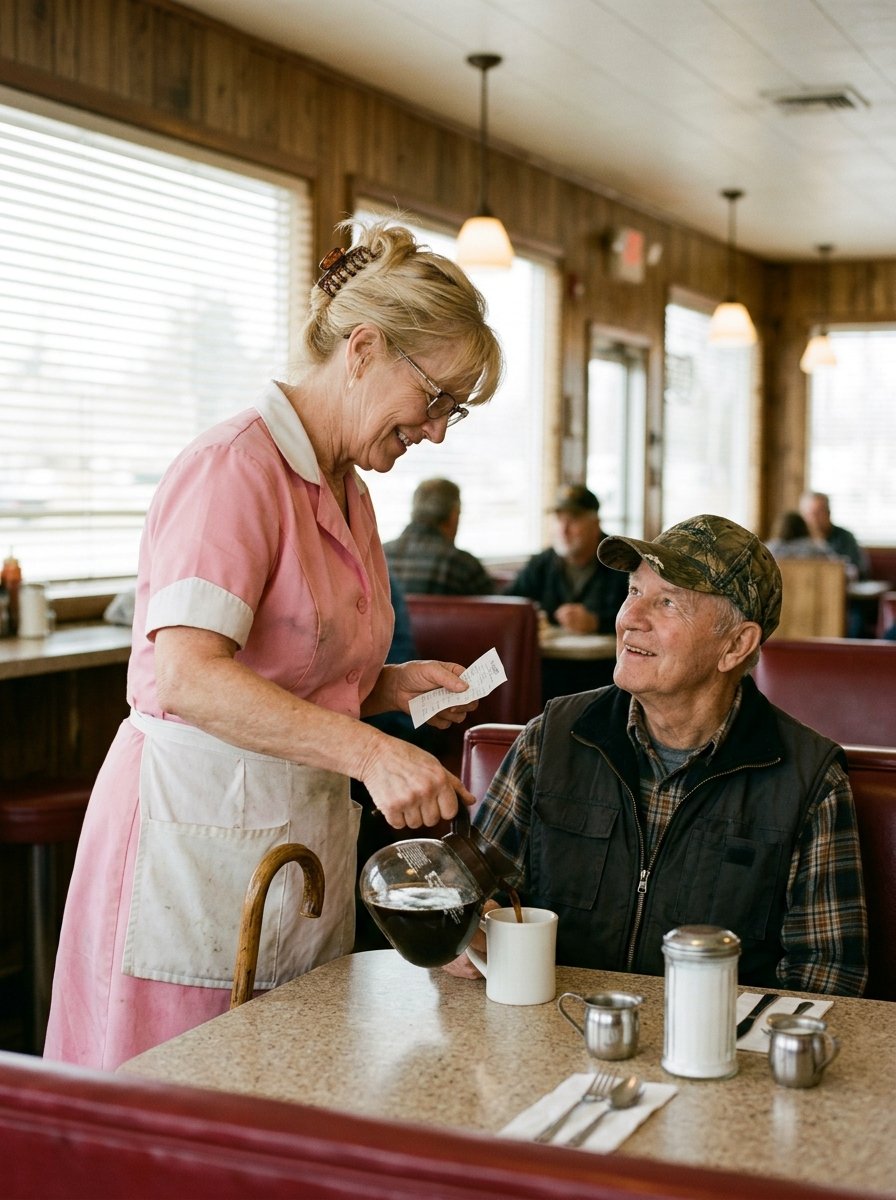
So I drove to a twenty-four-hour diner.
Ordered the cheapest coffee they had.
And sat in a corner booth until sunrise.
Christmas morning.
Nine o’clock.
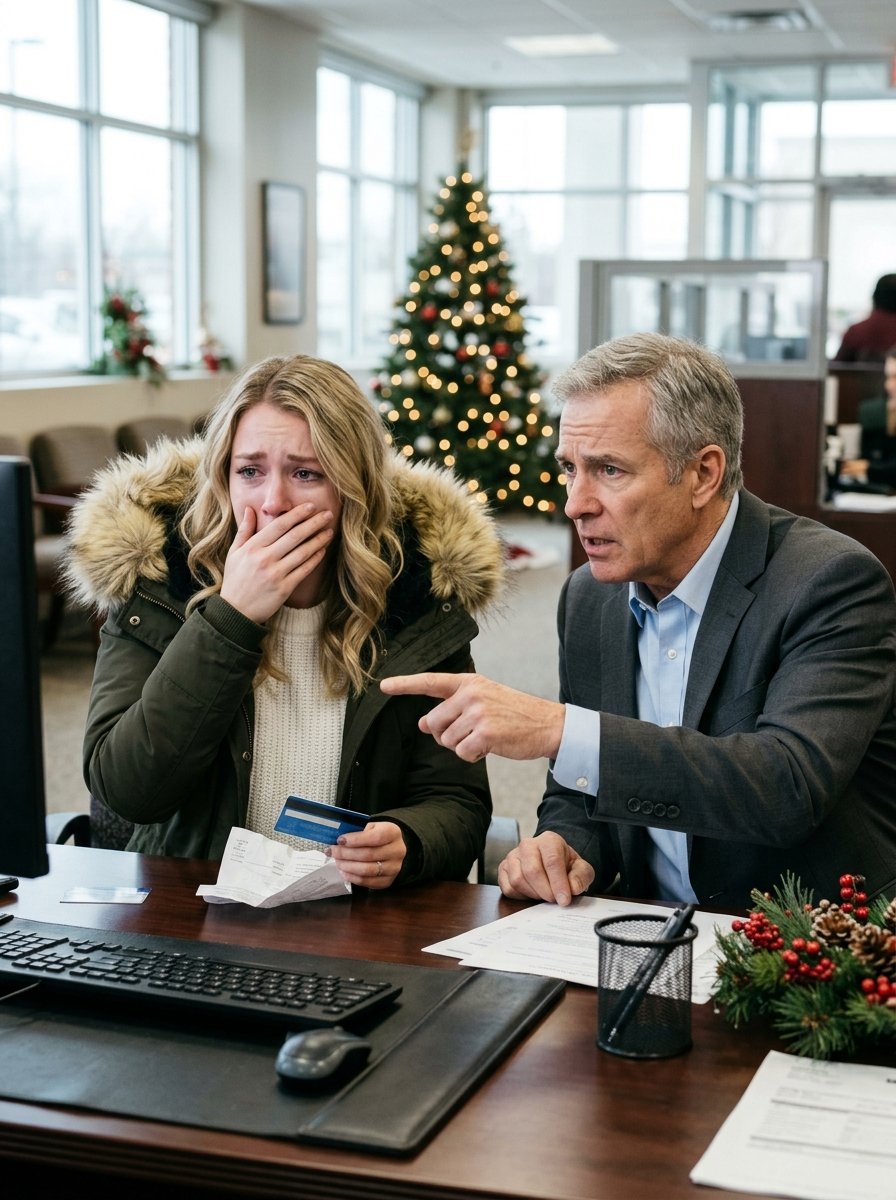
The branch opened.
I walked inside wearing the same clothes from the night before.
A manager named Arthur greeted me.
I handed him the card.
“My grandfather gave me this years ago. I’ve never used it. I don’t really know what’s connected to it.”
Arthur took the card to his computer.
A minute passed.
Then another.
He turned toward me.
His expression had changed.
“Ma’am?”
“Yes?”
He pulled out a chair.
“Please sit down.”
That was the moment I became afraid.
He slowly turned the monitor toward me.
Account balance:
$473,000.
I read it once.
Then again.
“That can’t be right.”
Arthur checked.
“It is.”
The account had been opened in my name when I was fifteen.
Grandpa Owen made the original deposit.
Then more deposits over the years.
Interest accumulated.
The final contribution had been made about six weeks before he died.
“You’re the sole owner,” Arthur explained.
“Nobody else can access it.”
I could barely breathe.
Then he hesitated.
“There’s one more thing you should know.”
A note had been attached to the account.
Approximately two years after my grandfather died, someone had come into the bank asking for information about it.
They were refused because they weren’t the account holder.
I asked the question even though some part of me already knew the answer.
“Who?”
Arthur looked at the record.
“Your father.”
And suddenly, Christmas Eve looked completely different.
I kept looking at the screen.
The numbers had not changed, but their meaning kept changing inside me.
A room with a lock I controlled. A mechanic replacing my failing starter. Groceries without calculating the total before reaching the register.
Then another thought pushed through.
My father had known there was something to ask about.
He had watched me count gas money at his kitchen table.
“Did he know how much?” I asked.
Arthur shook his head.
“The record says he requested information. It doesn’t say he received any.”
“Could he have found out somewhere else?”
“I can only speak for what happened here.”
I appreciated that answer more than reassurance.
Arthur moved a box of tissues closer without making me take one.
Outside his glass office, a woman carried a covered plate toward the staff room.
Until then, I had barely noticed how few people were inside.
A handwritten sign beside the entrance announced holiday assistance hours for existing customers.
I had seen the unlocked door and walked through it without reading.
“We don’t usually open today,” Arthur said, following my glance.
“A pipe burst at our other location yesterday. We promised a short window for customers whose appointments were canceled.”
“I don’t have an appointment.”
“You have an account. And you’re here.”
He said it simply, without turning ordinary help into a favor I would owe him.
My phone vibrated on his desk.
Vanessa.
I watched her name disappear.
Arthur asked whether I had identification. Then he explained what he needed to confirm before allowing any withdrawal.
The card was old enough that a replacement would be necessary.
The account itself was active.
My grandfather had arranged several deposits into different savings products. Their proceeds had eventually settled into the account on Arthur’s screen.
Arthur printed a summary and explained which records I could request later.
I understood perhaps half of it.
“Can I afford a hotel?” I asked.
His face softened.
“Yes, Rachel.”
That was when I cried.
Not when I saw the balance.
Not when he said my father’s name.
I cried because a stranger answered a question I had been too ashamed to ask anyone else.
Arthur gave me time.
Then we checked the contact information attached to the account.
The mailing address was my grandfather’s old address.
After his death, undeliverable correspondence had been returned. Electronic access had never been established.
There had been no withdrawals.
No mysterious transactions waited beneath the balance.
For three years, the money had remained exactly where Grandpa had left it.
I had spent those years thinking the card was mostly a keepsake.
“I thought using it would mean I’d failed,” I admitted.
Arthur folded his hands.
“Did your grandfather say that?”
“No.”
“What did he say?”
“For when I really needed it.”
Arthur let the difference sit between us.
We updated my address to a temporary mailing arrangement the bank accepted after explaining its limits.
I created online access on my own phone.
He turned away while I entered passwords.
I chose security answers my family would never guess.
Then I asked him to explain the access restriction again.
He did, patiently.
Being my father gave Dad no authority over the account.
Being my emergency contact elsewhere gave Mom none either.
Nobody could arrive with a story about family hardship and simply take the money.
I asked for copies of the account history and the note concerning Dad’s visit.
Arthur said some records would require a formal request.
He helped me submit it.
Before I left, I withdrew enough cash for immediate expenses and arranged access to money for a hotel.
The larger decisions could wait.
For the first time in months, waiting did not feel like danger.
My phone vibrated again as I stood.
This time, Mom had sent a message.
Where are you?
I typed three answers and deleted all of them.
Finally, I wrote:
I’m safe. I need space.
Her reply arrived before I reached the door.
Your father says you’re making this bigger than it is.
I stood under the little paper snowflakes taped to the glass.
Then I put the phone in my pocket.
The hotel clerk asked whether I wanted one night or two.
“Three,” I said.
The word felt reckless.
Then it felt practical.
Upstairs, I placed the packed bag on the bed and finally emptied it.
Two sweaters. One pair of jeans. Socks that did not match. The charger. The toothbrush.
No work shoes.
No medication for my migraines.
No winter coat.
I had left wearing a thin quilted jacket because I had expected to spend the evening downstairs.
The bag’s choices were strange.
Whoever packed it had remembered the tiny charging block beneath my nightstand.
They had not remembered the prescription bottle beside it.
I called my pharmacy and learned what could be done after the holiday.
Then I called my friend Leah.
She answered over the sound of dishes.
“Merry Christmas. Are you working today?”
“No.”
Something in my voice stopped her.
“Rachel?”
I sat on the edge of the hotel bed.
“My parents threw me out last night.”
There was silence.
Then a chair scraped.
“Where are you?”
I told her.
“Stay there. I’m coming.”
“You have your family.”
“I also have a car.”
I almost told her not to bother.
The words reached my mouth automatically.
Instead, I gave her the room number.
While I waited, I showered.
Hot water stung my fingers. I had not realized they were still sore from the cold.
I put on one of the sweaters from the bag.
It smelled like my parents’ laundry detergent.
For a moment, that familiar smell nearly undid me.
Leah arrived carrying leftovers, a paper shopping bag, and an expression I had never seen on her.
She set everything down before hugging me.
I tried to explain without crying.
I failed.
She listened to the kitchen conversation, the staircase, the diner, and the bank.
At the account balance, she sat down.
“Does your family know?”
“Not from me.”
“Then don’t tell them while you’re exhausted.”
She said nothing about what I should buy.
Nothing about luck.
Instead, she asked whether I had eaten anything besides diner toast.
“I only bought coffee.”
She opened the food containers.
We ate turkey from hotel teaspoons because neither of us had remembered forks.
Halfway through, my phone rang.
Dad.
Leah looked at me.
“You don’t have to answer.”
“I want to hear what he says.”
I put it on speaker.
“Where have you been?” he demanded.
“Merry Christmas to you, too.”
“Your mother’s worried sick.”
“I told her I’m safe.”
“You can come back and discuss this like an adult.”
“Can I collect my belongings?”
A pause.
“We need to settle your outstanding balance first.”
Leah’s eyes narrowed.
“You never told me I owed rent.”
“We shouldn’t have to spell out basic responsibility.”
“You wrote seven months of charges on a piece of paper last night.”
“You lived under my roof.”
“And you locked me outside.”
“Don’t start performing.”
I looked at the bag on the bed.
“Who packed my things?”
“What difference does that make?”
“My medication wasn’t in it.”
“You’re alive, aren’t you?”
Leah reached across the desk and took my hand.
I stared at her fingers until I trusted my voice.
“I’ll arrange a time to collect the rest.”
“You’re not taking anything until we’ve talked.”
Then he added, almost casually:
“If you’ve finally sorted yourself out, you can afford to contribute.”
I said nothing.
He waited.
The silence lasted long enough to become a question.
“What does that mean?” I asked.
“It means you’ve always had options.”
“Which options?”
“You know perfectly well.”
“No, Dad. Explain.”
He hung up.
Leah kept holding my hand.
Neither of us spoke for several seconds.
Then she said, “He was fishing.”
I nodded.
The money had changed my circumstances.
It had also changed the shape of his sentences.
That afternoon, Vanessa sent a photograph of the Christmas table.
My place had been cleared.
The caption said:
Mom still made your favorite potatoes.
I looked at it longer than I wanted to admit.
Behind the serving bowl sat a blue folder.
I recognized it because Vanessa had carried it around for weeks.
She brought it to breakfast once, then snapped it shut when I entered.
At the time, I assumed it concerned her salon.
She owned a small place called Willow House, with expensive mirrors and rent she complained about whenever appointments slowed.
Months earlier, she had called my two jobs “temporary little things.”
Now she texted again.
Dad’s being stubborn. Let me help fix this.
I answered:
I need my medication and work clothes.
She replied immediately.
Come tomorrow morning. We can handle everything together.
Then another message:
Bring identification. There’s some household paperwork.
I showed Leah.
“Household paperwork?” she repeated.
“I don’t know.”
“Then nobody signs anything.”
I had not said I would.
Still, hearing it aloud helped.
That evening, I made a list.
Work clothes. Medication. Birth certificate. Passport. Laptop. Tax documents. Grandpa’s wooden toolbox.
The toolbox mattered enough that I underlined it.
He had given it to me when I helped him repair his porch steps.
There was nothing valuable inside by anybody else’s measure.
A hammer. Screwdrivers. A folding ruler worn smooth at the edges.
But he had taught me how to fix things with those tools.
My father called that kind of work a distraction when I did it.
When he needed a fence painted, it became family duty.
I wrote down every item I could remember.
Then I added something I had avoided admitting for months.
My own mail.
Dad brought it inside.
He set bills on the kitchen counter and handed me advertisements.
Whenever I asked whether anything else had arrived, he said no.
I had believed him because suspicion felt ugly.
Now I remembered an envelope from a business lender lying beneath his newspaper.
I remembered Vanessa asking how I wrote my full legal name.
I remembered Mom going quiet when I mentioned looking for an apartment.
None of those things proved anything.
Together, they made sleep difficult.
The next morning, Leah drove me to my parents’ house.
We arrived at ten.
The wreath still hung on the door.
My car’s empty space in the driveway looked smaller than it had felt when I sat there freezing.
Dad opened the door before we knocked.
His eyes moved from me to Leah.
“This is a family conversation.”
“I’m helping Rachel carry things,” she said.
He did not step aside.
Behind him, Mom stood near the dining room.
Vanessa sat at the table beside the blue folder.
My coat hung on the banister.
Seeing it there hurt with an absurd precision.
Someone had passed it while carrying my bag downstairs.
Someone had decided I would not need it.
“I’m collecting my belongings,” I said.
Dad held out the handwritten bill.
“Then we can start here.”
The amount was $4,218.
I had remembered only the first digit.
Now I studied the columns.
Groceries: $980.
Water: $413.
Internet: $525.
Utilities and household upkeep made up the rest.
“Why is internet seventy-five dollars a month?” I asked.
“That’s what it costs.”
“For the whole house?”
“You used it.”
“So did everyone else.”
Vanessa slid out a chair.
“Can we stop picking apart every little number?”
I looked at her.
“You added them.”
Her hand paused on the chair.
“What?”
“The sevens. You put lines through them.”
She glanced at Dad.
He answered for her.
“She helped organize it.”
“Then she can explain it.”
Mom pressed her lips together.
Leah stayed beside the door.
I pulled out my phone and photographed the bill.
Dad snatched it back.
“You don’t need evidence against your own family.”
“I need a copy of something you say I owe.”
Vanessa opened the blue folder.
“This is exactly why we should make everything clear.”
She placed a typed document on the table.
The heading read:
Family Financial Resolution.
I did not touch it.
“What is that?”
“A way to put this behind us,” she said.
There were three pages.
The first acknowledged assistance I had received.
The second described a payment arrangement.
The third included signature lines.
Vanessa tapped the bottom of the first page.
“You agree that everyone contributed. Then we stop arguing.”
Leah came closer.
“Rachel needs time to read it.”
Dad’s face reddened.
“Nobody asked you.”
“I did,” I said.
I took photographs of the pages while Vanessa protested that I was being dramatic.
Then I found the sentence halfway down page two.
It mentioned a business.
Willow House.
I read it again.
“Why is your salon in this?”
Vanessa reached for the document.
I moved it out of reach.
“It’s just how we’re organizing family expenses.”
“No.”
Dad spoke sharply.
“Rachel.”
“No,” I repeated. “My showers have nothing to do with her salon.”
The room became very still.
I read further.
The proposed payment was not $4,218.
That number appeared as an initial amount.
Another paragraph referred to an outstanding commercial obligation.
A blank space waited for a much larger figure.
They had invited me home to sign something they had left unfinished.
“How much?” I asked.
Vanessa looked at Dad again.
I recognized the glance now.
Not surprise.
Permission.
Dad folded his arms.
“You’ve benefited from this family your whole life.”
“How much?”
“Forty-six thousand,” Vanessa said quietly.
Leah drew a slow breath.
I looked at the Christmas placemats still on the table.
Forty-six thousand dollars sat between plastic holly leaves and a bowl of wrapped chocolates.
“Is that your debt?”
“It’s more complicated than that.”
“Is it mine?”
“No,” she said.
Dad immediately interrupted.
“Family obligations aren’t always legal obligations.”
I turned toward him.
“You locked me outside because you wanted me to pay her debt?”
“We wanted you to stop pretending you had nothing.”
There it was.
No apology.
No attempt to deny the cold.
Just irritation that I had made him say it.
“What did you think I had?”
Vanessa answered before he could.
“Grandpa left you something.”
My stomach tightened.
“How do you know?”
“You kept the card.”
I had never shown her the card.
Not once.
Leah stepped nearer.
“Rachel, we should leave.”
“Not without my medication.”
Mom finally moved.
“I’ll get it.”
“And my documents,” I said.
Dad blocked the hallway.
“Nothing leaves until we finish.”
I looked directly at him.
“Move.”
He stared back, astonished by a word he had used against me all my life.
Then Mom said, “Let her get her things, Martin.”
It was not brave enough to erase Christmas Eve.
It was enough to make him turn.
I slipped past him before he decided otherwise.
Leah followed.
Upstairs, my room looked wrong.
The drawers had been pushed closed unevenly.
My laptop sat on the dresser instead of beneath the desk.
A framed photograph of Grandpa lay facedown.
My passport envelope was missing.
I checked the drawer twice.
Then I checked beneath the bed.
Vanessa appeared in the doorway.
“Can you please stop acting like we’re criminals?”
“Where is my passport?”
“How would I know?”
“Who packed the bag?”
She looked away.
“I did.”
I waited.
“Dad said you needed to leave.”
“And you decided what I could take.”
“I was trying to make it easier.”
“You packed a toothbrush and left my coat.”
“I wasn’t thinking about the coat.”
That admission came too quickly.
I looked at her hands.
They were shaking.
Not with remorse, I thought.
With something more immediate.
“What happens if I don’t sign?”
Her face changed.
For the first time since I had entered the house, the practiced patience disappeared.
“I lose everything.”
“Then say that.”
“You wouldn’t have listened.”
“You never asked.”
She gripped the doorframe.
“You always get to be the good one.”
I almost laughed.
I had spent seven months being told I was the failed one.
Now, apparently, goodness was another thing I had stolen from her.
“Where is my passport?”
Mom arrived carrying an envelope.
“Here.”
I took it.
My birth certificate was inside too.
“Where was this?”
“In the study.”
“Why?”
She did not answer.
Vanessa left before I could ask anything else.
Leah helped me pack while Mom stood beside the dresser.
I found the toolbox in the closet.
Its weight steadied me.
Before leaving, I checked the laptop.
A browser window remained open.
It showed a financing company’s application portal.
I had never visited it.
My name appeared in the upper corner.
I took a photograph.
Then I closed the laptop and put it in my bag.
Downstairs, Dad demanded to know what I was carrying.
“My belongings.”
“Some of those were bought while you lived here.”
I stopped on the bottom stair.
“Do you want to make a list in front of Leah?”
He stepped aside.
Vanessa had gathered the papers.
The blue folder was gone.
At the door, Mom reached for my arm.
“Please don’t tell people we threw you out.”
I looked at her hand until she released me.
“What should I tell them?”
She had no answer.
Outside, Leah loaded the car while I stood holding my coat.
The air was cold enough to sting.
I put it on slowly.
Something crinkled in the pocket.
A folded receipt.
At first, I thought it was mine.
Then I saw the date.
December nineteenth.
A copy shop.
Twelve pages.
Under the receipt lay a small torn piece of paper.
My full name had been written several times.
In different handwriting.
I photographed both before putting them into an envelope.
Leah watched my face.
“What?”
“I don’t know yet.”
We drove straight to her house.
She cleared the dining table and brought out a notebook.
We listed what we knew.
The bank account was mine.
Dad had tried to obtain information.
Vanessa knew about the card.
They had searched my room.
They had prepared a document linking household expenses to her business debt.
My identification had been moved.
A financing application had been opened on my laptop.
None of it established exactly what had happened.
That mattered.
I did not want to replace my family’s accusations with guesses of my own.
Leah found the lender’s public contact number from the company’s website.
I called and asked whether an application existed in my name.
The first representative could not discuss it without verification.
I followed her instructions.
Then I waited while she consulted someone else.
The hold music repeated three times.
When she returned, her voice was careful.
“There is an incomplete application listing you as an additional guarantor.”
“Did I submit it?”
“It was started through the existing borrower’s portal.”
“I did not authorize it.”
She stopped typing.
“Would you like to report that formally?”
“Yes.”
She explained the next steps.
An investigator would contact me during regular business hours.
No loan had been issued based on that incomplete application.
I asked her to preserve the associated records.
Then I wrote down the reference number.
Afterward, I sat staring at the notebook.
My sister had not simply hoped I would offer money.
She had started arranging a version of my consent before asking for it.
Leah made tea.
I let it go cold.
That evening, Dad sent a message.
You owe your sister an apology for humiliating her in front of your friend.
I answered once.
Do not use my identity or access my accounts. Further financial requests must be in writing.
His response arrived immediately.
Who is putting these ideas in your head?
For years, that question had worked.
Any boundary had to belong to somebody else.
I read it twice.
Then I saved it.
The next business day, Arthur called to confirm the records I had requested were ready.
I went alone.
This time, I had eaten breakfast.
I had my coat.
I had a notebook.
The changes were small enough to fit inside one morning.
They felt enormous.
Arthur showed me the account history and explained the documents establishing sole ownership after I reached adulthood.
The earlier arrangement had been properly transferred.
My grandfather had not left a loophole for my father.
The note about Dad’s inquiry was brief.
He had described himself as assisting an adult daughter with family financial planning.
He had been told to bring me.
He never had.
“Could he know this account existed without knowing the balance?” I asked.
“Certainly.”
“Could he know Grandpa gave other family members money?”
Arthur looked up.
“That would be outside what I can discuss.”
I nodded.
He pushed my copies across the desk.
At the bottom of one old form, Grandpa’s signature leaned slightly uphill.
I remembered him signing birthday cards at his kitchen counter.
For the first time, I felt grief without humiliation crowding it aside.
“He must have trusted me,” I said.
Arthur gave me a moment before answering.
“The instructions placed the decisions with you.”
I left with the records and a practical list of things still to do.
Identity protection.
A permanent mailing address.
Professional advice before making large decisions.
I was sitting in my car when Mom called.
I almost let it go to voicemail.
Then I answered.
“Are you alone?” she asked.
“Yes.”
Her breathing sounded shallow.
“Your father said you found some money.”
“I found something Grandpa left me.”
“How much?”
“I’m not discussing that.”
“All right.”
The absence of an argument startled me.
Then she whispered, “Did Vanessa give you anything to sign?”
“You saw her.”
“I didn’t see all of it.”
“Mom.”
“I know.”
There was a noise behind her.
A door closing.
She lowered her voice.
“I need to show you something before he realizes I still have it.”
I closed my eyes.
“Is this about the salon?”
“Yes.”
“What is it?”
“A loan statement.”
“Then send me a picture.”
“I don’t know how to explain it.”
“Start with why it matters.”
She made a sound I had never heard from her before.
Not crying.
Something closer to surrender.
“Because the signature on the first loan isn’t mine.”
I sat upright.
“What first loan?”
“The one against the house.”
Through the windshield, people crossed the parking lot carrying ordinary errands into ordinary days.
I watched a little boy drag one mitten through the snow piled beside a curb.
“Why are you telling me now?”
Mom took a breath.
“Because your father says there’s one more way to make you cooperate.”
“What way?”
“He said he would tell you the house was going into foreclosure.”
“Is it?”
“We’re behind. I don’t know how far.”
“Then we need to separate what’s true from what he wants me to believe.”
“I know.”
“Do you?”
She went silent.
For a moment, I heard the familiar invitation to comfort her.
I kept my hands on the steering wheel.
“Send the statement,” I said.
She did.
The photograph was crooked.
A kitchen light reflected across the upper corner.
I recognized the countertop beneath it.
Christmas dinner had been served three feet from a debt nobody had mentioned.
The statement concerned a home equity loan.
The outstanding principal was far larger than forty-six thousand dollars.
At the bottom, a late payment notice warned of further collection activity.
There was no foreclosure date.
No immediate eviction order.
Just a serious problem that had been allowed to grow.
“Whose name is on the house?” I asked.
“Both of ours.”
“Whose names are on the loan?”
“Both.”
“And you didn’t sign?”
“No.”
“When did you find out?”
She hesitated.
“October.”
I looked down at the date on my notebook.
October.
I had been living upstairs.
Cooking my own meals.
Taking extra shifts.
Painting the fence before winter.
“You’ve known for two months?”
“I kept hoping he would fix it.”
“What did he say?”
“That I signed and forgot.”
“Did you?”
“No.”
The answer came firmly enough to surprise us both.
Then she added, “I wasn’t in town that day.”
“Where were you?”
“With Aunt Denise after her surgery.”
I remembered.
I had driven Mom to the bus station because Dad said he had a meeting.
“Do you have the ticket?”
“Probably in my email.”
“Save it. Don’t delete anything.”
She asked whether I could come over.
“No.”
“Rachel—”
“We can meet somewhere else. And I’m not promising money.”
“I understand.”
I did not believe she understood yet.
But she agreed to meet at Leah’s house the following afternoon.
Before then, I needed someone who understood documents better than I did.
Leah recommended an attorney her brother had used for a contract dispute.
His name was Daniel Mercer.
His office offered a short initial consultation.
I called and described the problem without giving him the dramatic version.
An unauthorized guarantor application.
A document I had been pressured to sign.
Possible misuse of identification.
A separate loan my mother disputed.
He asked me to send copies through the office’s secure intake system.
Then he gave me an appointment.
The receptionist did not ask whether I was sure my family meant harm.
She asked whether I wanted correspondence sent to my hotel or by email.
I chose email.
That ordinary question nearly made me cry again.
Daniel read the proposed family resolution twice.
He was younger than I expected, with reading glasses he kept forgetting on top of his head.
“This document doesn’t create a clear transfer of an existing commercial debt,” he said.
“Then it’s meaningless?”
“No. A badly drafted document can still create expensive arguments.”
He pointed to the reimbursement clause.
The wording described money paid on behalf of a joint family enterprise.
Another paragraph suggested I would compensate my parents for obligations connected to Willow House.
“Your signature could be used to argue that you accepted responsibility.”
“But I never worked there.”
“Then don’t sign something implying you did.”
I told him about the laptop.
He made notes.
The financing company’s investigator had already acknowledged my complaint.
Daniel advised me to keep communication factual.
We documented what I had observed without claiming facts I could not establish.
I arranged to secure my credit files and reviewed my reports.
There were no unfamiliar open accounts.
That relief was real.
It did not erase the application.
Daniel explained the difference.
An attempt could matter even if it had not succeeded.
I asked what I should do about Mom.
“She needs her own advice,” he said.
“Can’t you just tell us both what happened?”
“I can explain general issues. Her interests and yours may not stay identical.”
That sentence stayed with me.
I had assumed helping someone meant standing inside the same problem.
Perhaps it could mean finding separate doors out.
When Mom arrived at Leah’s house, she brought a grocery bag full of papers.
Not a neat folder.
Receipts, bank envelopes, statements, and printed emails had been pushed together.
She apologized for the mess.
I thought of my pre-packed bag.
How carefully my toothbrush had been included.
How carelessly the rest of my life had been excluded.
We sat at Leah’s dining table.
Leah stayed in the kitchen within hearing distance.
Mom began with the house.
Dad had borrowed against it eighteen months earlier.
At first, she believed the payments concerned repairs.
Then she found a statement showing a large advance.
When she confronted him, he said the salon needed temporary support.
He insisted they had discussed it.
Later, he produced a copy bearing her signature.
“It looked like mine,” she said.
“But I knew.”
“Did you tell him that?”
“Yes.”
“What happened?”
“He said I was confusing the refinancing paperwork with the loan.”
“Were you?”
“No.”
She reached into the grocery bag and found the bus confirmation.
The trip had lasted nine days.
The disputed paperwork was dated on the fourth.
“That doesn’t prove everything,” she said quickly.
I recognized the sentence.
It sounded like something Dad would say.
“It gives you something to investigate.”
Mom nodded.
Then she took out an older bank envelope.
“This is why I wanted to talk without your father.”
Inside were photocopies of checks.
One had been made payable to Dad.
Another to Vanessa.
Both bore Grandpa’s signature.
The dates were years apart.
The amounts were substantial.
I did not touch them.
“Where did you get these?”
“Your grandfather gave me copies.”
“Why?”
“He wanted me to understand what he’d already done.”
Mom rubbed the edge of the envelope.
“He worried Martin would say he hadn’t been fair.”
Dad had said exactly that after the funeral.
Not to me directly.
In the kitchen, believing I could not hear.
Owen always had favorites.
I remembered Mom washing a glass for far too long.
“Did Grandpa tell you about my account?”
“He said he had put something aside for you.”
“How much?”
“He didn’t say.”
“Did you tell Dad?”
“Yes.”
The word fell between us.
“When?”
“After the funeral.”
I sat back.
“Why?”
“He was angry about the estate. I wanted him to stop saying you’d manipulated your grandfather.”
“So you gave him another thing to resent.”
Her eyes filled.
“Yes.”
No excuse followed.
I waited anyway.
She finally continued.
“Your grandfather helped your father’s business years ago. Then he helped Vanessa open the salon.”
“What did Dad call the money?”
“A loan when he thought it sounded respectable. A gift when repayment came up.”
“And Vanessa?”
“She said it was an investment.”
“Was it?”
“I don’t know.”
“Then why keep these copies?”
Mom looked at the table.
“Because I knew your father changed stories.”
That hurt more than I expected.
She had known.
She had understood his versions could shift depending on the audience.
Still, when he called me a drain, she had supplied another word.
Desperate.
“Why did you say that to me?”
Her mouth trembled.
“I was angry.”
“At me?”
“Yes.”
“For what?”
“For still having a way out.”
The room seemed to contract.
She wiped her cheeks with the heel of her hand.
“I didn’t know what was on the card. I didn’t even know whether you still had it.”
“But you thought I might.”
“Yes.”
“And instead of telling me what was happening, you helped him.”
“Yes.”
Leah set a glass of water beside her.
Mom thanked her without looking up.
“I won’t tell you I was protecting you,” she said.
“I wasn’t. I wanted someone else to be responsible for the disaster.”
I had prepared myself for denial.
Honesty was harder in a different way.
It gave me nothing to argue against.
“You watched him block the stairs.”
“I know.”
“You heard the lock.”
“Yes.”
“Did you think about where I would sleep?”
She began crying again.
I let her.
For years, her tears had ended difficult conversations.
This time, we stayed at the table.
Eventually, I said, “You need your own lawyer.”
“I can’t afford—”
“I can give you names and help organize records. I’m not taking over the loan.”
She looked up.
“All right.”
I could not tell whether she meant it.
But she took the list Daniel’s office had provided.
Before leaving, she asked whether I would come home for New Year’s.
“No.”
She nodded as if the answer had physical weight.
At the door, she turned back.
“I packed your coat in the hallway after you left.”
I stared at her.
“What?”
“I thought you’d come back. I put it where you’d see it.”
“You could have called.”
“I know.”
“You could have brought it outside.”
“I know.”
For a moment, she looked as if she wanted the coat to become evidence of love.
Then she lowered her eyes.
“I’m sorry.”
After she left, Leah helped me sort the papers.
We kept the originals together and made copies where Mom had agreed.
The checks did not make my account more legitimate.
It already was.
They did something else.
They exposed how much of our family story had depended on forgetting who had received help.
Dad had called assistance a weakness when I needed it.
He had called it opportunity when he took it.
Vanessa called late payments a rough quarter.
My depleted checking account made me irresponsible.
The difference had never been the money.
It was who got to describe it.
The lender’s investigator called the following morning.
Her name was Priya.
She asked specific questions about my laptop, identification, and the application portal.
I answered carefully.
Had I authorized anyone to act for me?
No.
Had I agreed to guarantee Willow House’s debt?
No.
Was I willing to provide a written statement?
Yes.
She explained that the existing borrower had begun a request to restructure obligations.
My name had been added during that process.
The application remained incomplete because required identity verification and signed documents had not been provided.
“What happens now?” I asked.
“We won’t proceed with you as a guarantor based on that submission.”
“And the person who entered it?”
“We’re reviewing the circumstances. I can’t discuss another customer’s account.”
I accepted that.
She asked me to preserve the photographs and any relevant messages.
Daniel helped me prepare a clear statement.
I signed only after reading every sentence.
That evening, Vanessa called.
I let it go to voicemail.
Her message contained no greeting.
“You need to stop talking to people until you understand what you’re doing.”
I listened twice.
Then I saved it.
A second message followed.
“I was going to tell you everything.”
I wrote back:
You can send your explanation in writing.
For an hour, nothing happened.
Then she sent six paragraphs.
She said the salon had survived a difficult year.
A stylist had left.
Rent had risen.
Suppliers required payment.
Her fiancé, Colin, had withdrawn his support after an argument.
Dad had promised to help.
Then he stopped answering questions.
She had believed my inheritance could make everything easier.
She had not meant for Christmas Eve to become cruel.
I stared at that last sentence.
Become cruel.
As though cruelty had arrived by accident after the planning was finished.
I answered:
Why did you know about the card?
Her reply came ten minutes later.
I found the note when I packed your bag.
The timing was wrong.
She had already been smiling for weeks.
They had already arranged the handwritten bill.
I did not confront her with that immediately.
Instead, I asked:
When did you first see it?
Three dots appeared.
Disappeared.
Appeared again.
Then:
After Grandpa died. You left your wallet open once.
I remembered staying overnight after the funeral.
My purse had been on a kitchen chair.
I had gone upstairs to find tissues.
That was all it took.
A moment when I assumed my belongings were safe.
Did you tell Dad?
Yes.
Did you photograph it?
Another long pause.
Yes.
I forwarded the exchange to Daniel.
Then I put my phone down.
For the first time since Christmas, I went an entire evening without answering anyone.
I watched a terrible holiday movie at Leah’s house.
We complained about the plot.
We washed dishes.
Ordinary life had not disappeared.
I had simply been standing too close to my family’s emergency to see it.
On New Year’s Eve, I worked an afternoon shift at the bookstore.
I had considered quitting both jobs immediately.
Then I realized I wanted to make decisions while calm.
The bookstore paid poorly, but I liked the staff.
My other job, handling inventory for a medical supply company, offered possible full-time hours.
I asked my supervisor about them.
He said we could discuss an opening in January.
No grand revelation.
No sudden dream career.
Just a conversation I had been too exhausted to begin.
At lunch, I reviewed apartment listings.
I chose three within a sensible budget.
The money meant I could buy something eventually.
It did not require me to decide everything before the year ended.
That afternoon, Daniel called.
Vanessa had contacted his office after I directed further financial requests there.
She wanted a meeting.
Dad wanted one too.
Separately, at first.
Then together.
“What do you recommend?” I asked.
“If you want answers, we can set conditions.”
“Will it accomplish anything?”
“That depends on what you need from it.”
I looked through the bookstore window.
A father helped his little girl zip a coat.
“I need to stop wondering which parts they planned.”
“Then we can ask direct questions.”
We scheduled the meeting for the following week.
Daniel requested the complete salon loan records and the documents behind their proposed resolution.
He made clear that attendance did not mean I would pay.
Dad objected to involving attorneys.
Then he sent the documents anyway.
Desperation, it turned out, changed his principles quickly.
The records arrived in pieces.
A payment schedule.
A commercial lease.
A draft restructuring proposal.
Emails between Vanessa and a broker.
Daniel organized them by date.
Then he called me back.
“There’s something you should see before the meeting.”
I went to his office.
He laid three pages side by side.
One showed the amount Dad had borrowed against the house.
Another showed transfers associated with the salon.
The third was an email Vanessa had sent before Christmas.
It discussed replacing an existing guarantor.
Colin.
I read the name again.
Her fiancé had not simply stopped helping after an argument.
He wanted his financial connection ended.
The proposed replacement was me.
“So the forty-six thousand wasn’t the whole problem.”
“No,” Daniel said.
“It was the immediate amount needed under the proposal they were pursuing.”
“And after that?”
“You would have faced further exposure if you agreed to the guarantee.”
I looked at the family resolution again.
Its vague wording felt uglier now.
Not sophisticated.
Not clever enough to survive careful review.
Just written for someone they expected to frighten into signing.
Daniel pointed to another email.
This one had come from Dad.
He had told the broker I was independently funded and willing to assist.
The date was December eighteenth.
Six days before he handed me the bill.
They had promised my cooperation before they manufactured the emergency meant to obtain it.
I read the sentence three times.
Then I asked for water.
Daniel brought it himself.
“What do you want to do?” he asked.
“Have the meeting.”
“You don’t have to.”
“I know.”
That mattered.
I could attend because I wanted answers.
I could leave when I had them.
The meeting took place on a Tuesday morning.
No dining table.
No staircase.
No family photographs watching from the wall.
Just six chairs in a conference room.
Daniel sat beside me.
Dad sat opposite.
Vanessa chose the chair nearest the door.
Mom had asked to attend, but Daniel explained that the loan dispute required separate advice.
She stayed away.
Dad opened with a complaint about costs.
“We could have handled this privately.”
Daniel placed the resolution document in front of him.
“Then explain what Rachel was being asked to accept.”
Dad looked at me.
“You know we wouldn’t hurt you.”
I kept my hands flat on the table.
“You already did.”
His jaw tightened.
Daniel asked about the email to the broker.
Dad said he had been optimistic.
Vanessa stared at the table.
Daniel asked when I had agreed.
Neither answered.
Then I turned toward my sister.
“Why Christmas Eve?”
She swallowed.
“The deadline.”
“What deadline?”
“The broker wanted an answer before the holiday break ended.”
“That explains urgency. It doesn’t explain locking me outside.”
Dad leaned forward.
“She’s twisting it.”
I did not look at him.
“Why Christmas Eve, Vanessa?”
She stared at the blue folder in front of her.
Then she said, “Because you kept saying you didn’t need the card yet.”
I felt the room grow quiet.
“I never said that to you.”
“You said it to Mom.”
“How many times did you discuss it?”
She did not answer.
I waited.
Finally, she looked at Dad.
He gave the smallest shake of his head.
This time, she ignored it.
“He said if you were really on your own, you’d have to use it.”
I looked at my father.
He rubbed his thumb across the seam of his briefcase.
“You thought I was hiding money.”
“You were.”
“I didn’t know what was there.”
“You expect us to believe that?”
“Arthur’s records show I never accessed it.”
Dad looked toward Daniel.
“Bank records don’t show what she knew.”
“No,” Daniel said. “They show what happened.”
Vanessa spoke before Dad could answer.
“I thought she knew too.”
I turned back to her.
“That still doesn’t explain the bag.”
Her eyes filled.
“I packed it before dinner.”
“Why?”
“Because if you went upstairs, you’d stay.”
“You mean I’d get my coat.”
“I mean you’d lock the door and refuse to talk.”
“So you took away the door.”
She began crying.
I kept my voice steady.
“What did you think would happen afterward?”
“You’d find out how much Grandpa left. Then you’d come back.”
“And pay.”
She nodded.
“Why would I do that after being thrown out?”
“Because you always fix things.”
For a moment, nobody moved.
The pipe.
The fence.
The doctor appointments.
The bills I had quietly covered when Dad said a transfer was delayed.
They had called me helpless while building their plan around my reliability.
They had not expected desperation to destroy me. They had expected it to make me useful.
Dad pushed back his chair.
“This is being made into something sinister.”
I looked at him.
“You told a broker I would help before asking me.”
“I was trying to save this family.”
“Whose signature is on Mom’s loan?”
He went still.
Daniel raised a hand before he answered.
“That matter belongs with her counsel.”
I nodded.
I did not need a confession obtained in a room where everyone was frightened.
Mom had records.
She had professional help.
She could decide what to do with them.
Vanessa wiped her face.
“Dad said the house loan was handled.”
Dad turned toward her.
“Don’t start.”
“You told me Mom agreed.”
“I said we were taking care of it.”
“You said she signed.”
The accusation changed direction.
I watched Vanessa understand something she had helped prevent me from understanding.
Dad’s promises expanded whenever someone else would bear the cost.
He had offered his wife’s security.
Then my future.
And he had allowed Vanessa to believe the next signature would finally make the earlier promises true.
That did not make her innocent.
She had searched my room.
Used my laptop.
Prepared my name for someone else’s debt.
But her hidden urgency finally had its full shape.
“Colin left because of the money,” she said.
“Not just because you argued.”
She shook her head.
“He found out I’d understated the debt. He wanted out of the guarantee.”
“And you thought replacing him with me would bring him back.”
She covered her mouth.
I waited.
“Yes.”
Dad stared at the wall.
There was nothing noble beneath either plan.
He wanted his decisions covered.
She wanted her relationship and business restored without admitting what she had concealed.
They had chosen me because I had spent years making other people’s comfort look effortless.
Daniel closed the folder.
“Rachel won’t sign the resolution, guarantee the debt, or provide the proposed payment.”
Dad looked at me.
“You’d let us lose the house?”
“I’m not responsible for loans I didn’t authorize.”
“After everything we’ve done?”
I took Grandpa’s old account summary from my bag.
I did not show the balance.
Instead, I placed the copies Mom had given me beside it.
The checks.
Dad looked down.
His expression changed before he could control it.
“You had help,” I said.
“So did Vanessa.”
“That was different.”
“Yes,” I said. “You were allowed to receive it.”
I gathered the papers.
Dad asked again how much money I had.
I stood.
“The amount won’t change my answer.”
Vanessa whispered my name.
I stopped beside the door.
“I’m sorry,” she said.
“I believe you regret where this ended.”
She flinched.
“I don’t know yet what else you regret.”
I left before she could turn that uncertainty into another request.
The consequences unfolded over months.
They were slower and less satisfying than a single dramatic punishment.
The financing company removed me from the proposed arrangement and continued its review of the unauthorized submission.
I provided my statement.
I did not withdraw it to make family gatherings easier.
Vanessa closed Willow House.
She sold equipment, negotiated what she could, and obtained advice about the remaining debt.
Colin did not return.
For once, she could not describe a fresh start without acknowledging what had ended.
Mom moved temporarily into a small apartment near her sister.
She challenged the disputed loan through her attorney.
The process did not magically erase the debt or settle every issue overnight.
Eventually, the house was sold under an agreement reached with professional guidance.
Dad lost the ability to call every payment somebody else’s responsibility.
Mom had to make decisions she had avoided for years.
She called me once to describe a difficult appointment.
Halfway through, she stopped.
“I’m asking you to take care of me again.”
“A little.”
“I’m sorry.”
She changed the subject.
It was a small correction.
Small corrections became the only kind I trusted.
I rented an apartment with tall windows and a kitchen too narrow for more than two people.
I accepted full-time work at the medical supply company.
I kept the bookstore shift on alternate Saturdays because I liked being there.
With professional advice, I made a plan for Grandpa’s money.
Housing.
An emergency reserve.
Longer-term savings.
No grand purchases made to prove I had become someone new.
I had been worth protecting when my checking account held twenty-two dollars.
That was the part I needed to learn.
Leah helped me move.
We ordered takeout and ate sitting on the floor.
When she asked where the toolbox belonged, I chose the cabinet beneath the sink.
Useful things should be within reach.
That spring, Vanessa sent me a letter.
It contained no bill.
No request.
She named what she had done without calling it a misunderstanding.
I read it twice and put it away.
I did not answer immediately.
Later, I agreed to coffee in a public place.
One hour.
No money.
It was awkward.
It was also the first conversation we had ever had without Dad deciding which one of us deserved sympathy.
Mom visited in June.
She brought bread and asked before opening a cupboard.
At the door, she looked toward my coat rack.
Then she said, “I should have come outside.”
“Yes.”
“I know saying it doesn’t repair it.”
“No.”
She nodded.
We had lunch anyway.
Dad sent birthday wishes through Mom.
I asked her not to carry messages.
She stopped.
The following Christmas Eve, Leah came over with her husband and their little boy.
We burned the first batch of rolls.
The smoke alarm interrupted a conversation about football.
Nobody called anyone useless.
Nobody turned a mistake into a permanent description.
After dinner, I drove to the diner where I had spent that other night.
The same waitress was working.
I ordered coffee and pie.
She recognized me only after I mentioned the corner booth.
“You stayed until morning,” she said.
“Yes.”
“Doing better?”
I thought about the apartment.
The work.
The boundaries that still felt uncomfortable sometimes.
“Yes,” I said. “I am.”
At home, I took Grandpa’s note from the envelope where I kept it.
The bank card beside it had been replaced months earlier.
I had kept the old one.
For a long time, I had treated his words like instructions to endure as much as possible before accepting help.
Now I read them differently.
Really needing something did not require permission from the people withholding it.
I placed the note in the shallow drawer beside my front door.
Then I hung my winter coat on its hook, set my key beside Grandpa’s handwriting, and turned out the light.