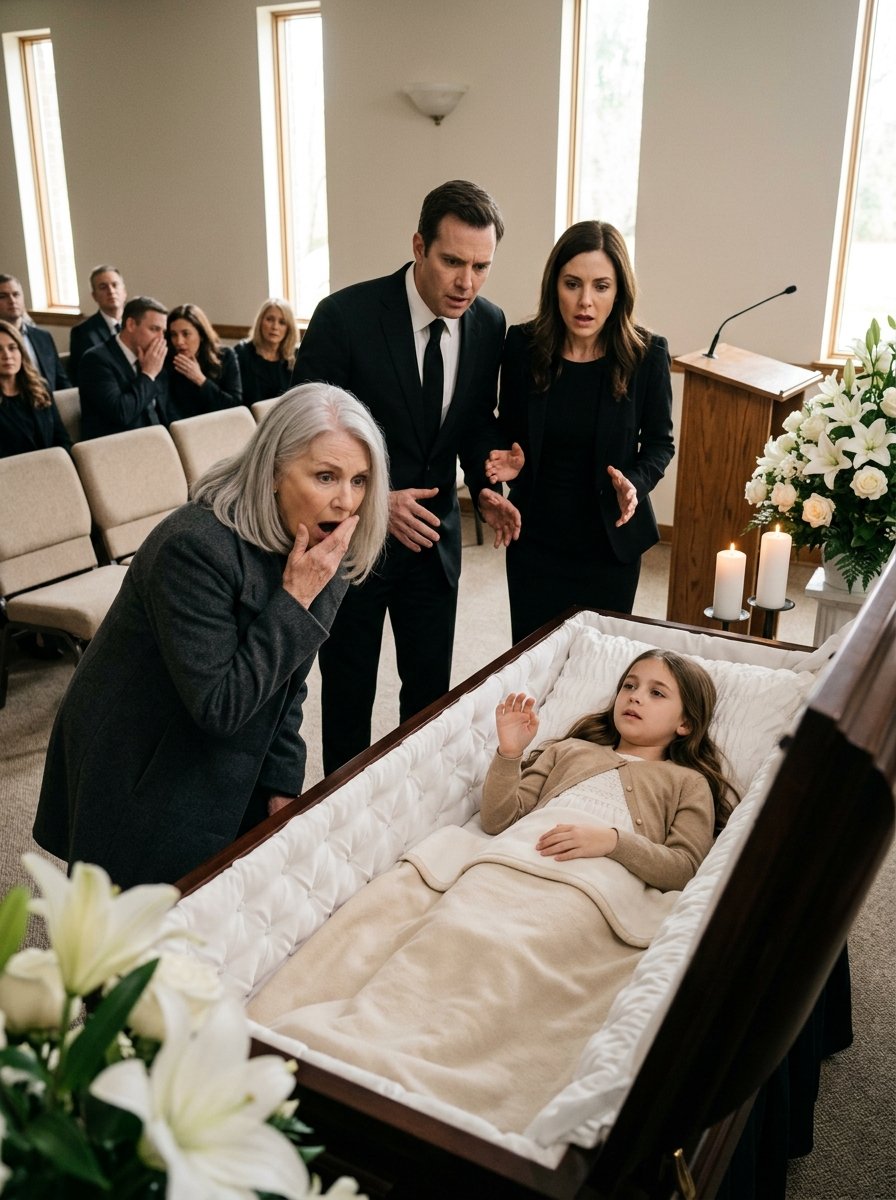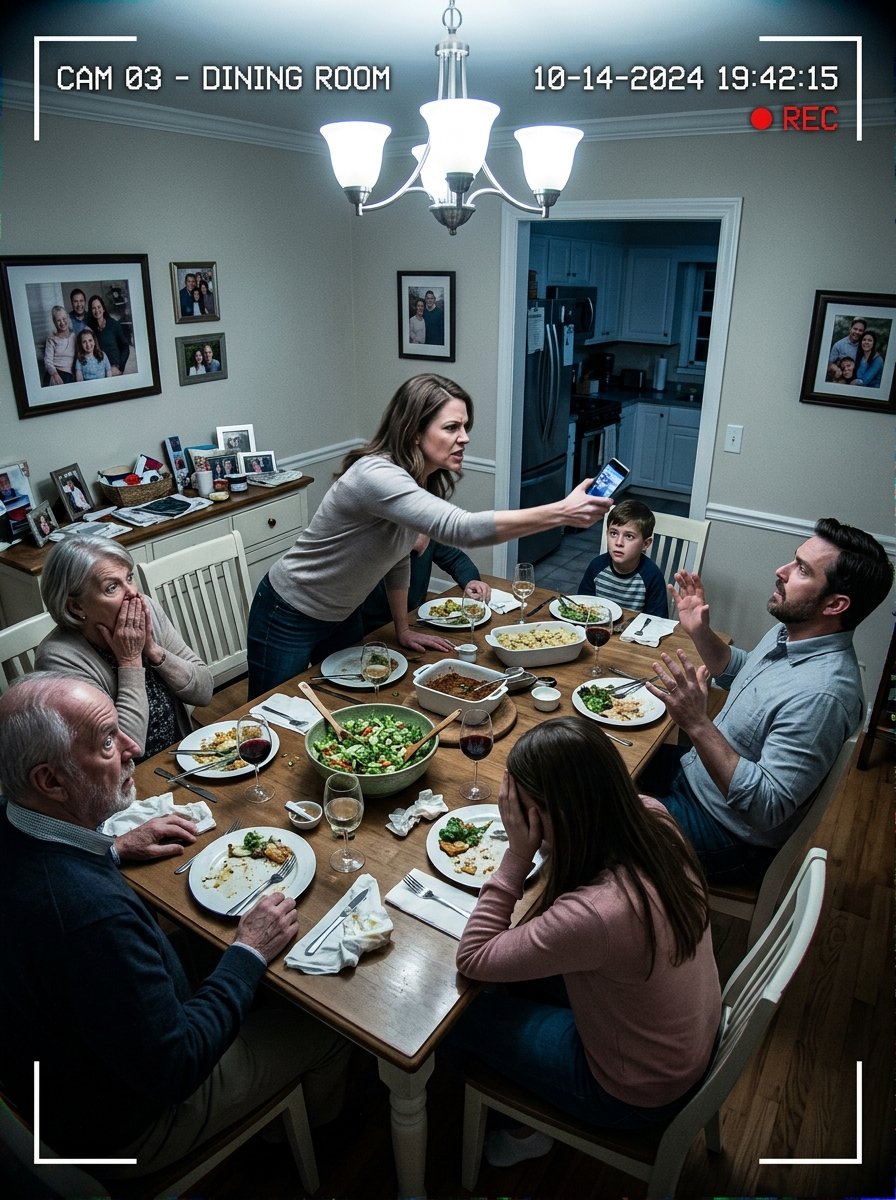
My 6-year-old daughter pressed her ear to my sister’s floor and whispered, “Daddy, Noah is crying down there.” My son had been missing for 14 months—until I heard three faint taps beneath the hardwood and saw my sister’s hands begin to shake.
“Daddy, I think Noah is down there,” my six-year-old daughter whispered. “I can hear him crying.”
I stood in my sister’s beautiful new living room, holding a cup of coffee, trying to imagine how my daughter could possibly believe her missing brother was beneath the floor.
Noah had been missing for fourteen months.
My wife and I had searched for him, answered endless questions, followed every possible lead, and endured the agonizing silence that came whenever another promising sighting led nowhere. Everyone had eventually told us to prepare ourselves for the possibility that we might never find him.
And now Lily was telling me she could hear him crying beneath my sister’s hardwood floor.
She knelt beside the fireplace, one small hand pressed against the polished wood, her cheek nearly touching the surface. At first, I assumed she had dropped something beneath the furniture.
Then I saw her expression.
It was the same look she had worn during the long months after her brother disappeared: frightened, hopeful, and desperate for someone to believe her.
“Daddy, I think Noah is down there,” she repeated.
For a moment, I couldn’t move.
Fourteen months earlier, our eight-year-old son had vanished during a family gathering at my parents’ farmhouse outside Asheville, North Carolina.
It had been a warm June evening. Relatives moved between the kitchen and backyard, children played near the apple trees, and the smell of grilled chicken drifted across the porch.
I remembered seeing Noah shortly after seven, carrying a paper plate toward the picnic table. I remembered telling him to save room for the strawberry shortcake his grandmother had made.
Those were the last ordinary words I ever spoke to him.
By the time we realized he was missing, the side gate stood open, and one of his sneakers lay beside the garden shed. Nobody could explain how an eight-year-old boy had disappeared from a yard filled with people who loved him.
The search began immediately.
Investigators combed nearby roads, wooded trails, abandoned buildings, and neighboring properties. Volunteers distributed photographs. Strangers called with possible sightings, but none of them led us to Noah.
At home, my wife, Caroline, began sleeping with his bedroom light on. Lily developed the habit of asking every evening whether her brother might come home before breakfast.
Eventually, she stopped asking.
But I never believed she had stopped waiting.
My sister, Meredith, had been one of the people who helped us endure those months. She brought groceries when Caroline could barely manage breakfast, accompanied us to meetings with investigators, and encouraged us to visit her newly completed house near Charlottesville, Virginia.
She believed a change of surroundings might help the children.
Her house stood in a quiet, gated neighborhood surrounded by rolling lawns and mature trees. Enormous windows, pale walls, and carefully arranged furniture gave the living room an almost impossibly pristine appearance.
Meredith had always cared about appearances. In our family, it was an ordinary joke, something we teased her about without ever giving it much thought.
Until that Saturday afternoon.
I set down my coffee and knelt beside Lily.
“Sweetheart, what makes you think Noah is under the floor?”
She pressed her palm more firmly against the hardwood.
“Because he told me he’s cold, Daddy, and he wants to come upstairs.”
A chill passed through me.
Before I could ask another question, Meredith appeared from the kitchen carrying a tray of tea.
The moment she saw Lily beside the fireplace, her expression changed.
“Why is she sitting there?” she asked.
“She says she hears something,” I replied.
Meredith looked down at the floor.
“It’s probably the heating system. This house makes strange noises sometimes.”
Her answer sounded reasonable. It should have reassured me.
Instead, something about the way she stared at the hardwood made me uneasy.
I lowered my ear toward the floor, expecting to hear nothing but the faint hum of the air conditioner.
Then I heard it.
Three soft taps.
I lifted my head and looked at Lily.
She was watching me with tears gathering in her eyes.
A few seconds passed.
Then the taps came again.
Three faint knocks from somewhere beneath the hardwood.
My heart began pounding as I looked from my daughter to my sister.
Lily started crying quietly.
And Meredith’s hands began to tremble so badly that tea spilled across the tray.
“Meredith,” I said, struggling to keep my voice steady, “what’s underneath this room?”
“Nothing important,” she answered. “Just part of the foundation.”
But she wouldn’t look at me.
The Architecture of Deceit
The tension in the living room was a physical weight, pressing against my chest with suffocating force. I kept my eyes fixed on Caroline, silently willing her to follow my lead.
“David, what are you talking about?” Caroline asked, her voice fragile, her eyes darting between Lily on the floor and the spilled tea.
“Children’s imaginations are so fragile after trauma,” Meredith chimed in quickly, her voice dripping with that sickening, fake maternal concern. She grabbed a linen napkin and began frantically dabbing at the tea on the floor, desperate to look busy. “She was just projecting her grief onto the floorboards. It’s perfectly normal, David. She just needs to rest.”
“Exactly,” I said, my voice smooth, agreeable. “Which is why I think Caroline should take Lily to that nice luxury hotel downtown for the night. Just the two of them. Get some room service, watch a movie. Being in this big, quiet house… it’s triggering her anxiety.”
Meredith stopped wiping the floor. She looked up, relief visibly washing over her features. She was desperate to separate the child who could hear the secret from the house.
“That’s a wonderful idea, David,” Meredith said eagerly, standing up. “I’ll pay for the room. You can use my card. It will be a nice girls’ night for them.”
“What about you, David?” Caroline asked, frowning. “You’re not coming?”
“I’m exhausted, Care,” I lied, rubbing the back of my neck, playing the role of the defeated, tired husband. “I’m going to stay here, take a hot shower, and help Meredith clean up this mess. I’ll come pick you both up in the morning.”
Caroline hesitated, looking at Lily, who was still staring at the floorboards. But the promise of a quiet hotel room, away from the oppressive perfection of Meredith’s house, won out. She nodded slowly.
Ten minutes later, I stood in the driveway with Meredith, watching the taillights of Caroline’s car disappear down the gated driveway, carrying my wife and daughter to absolute safety.