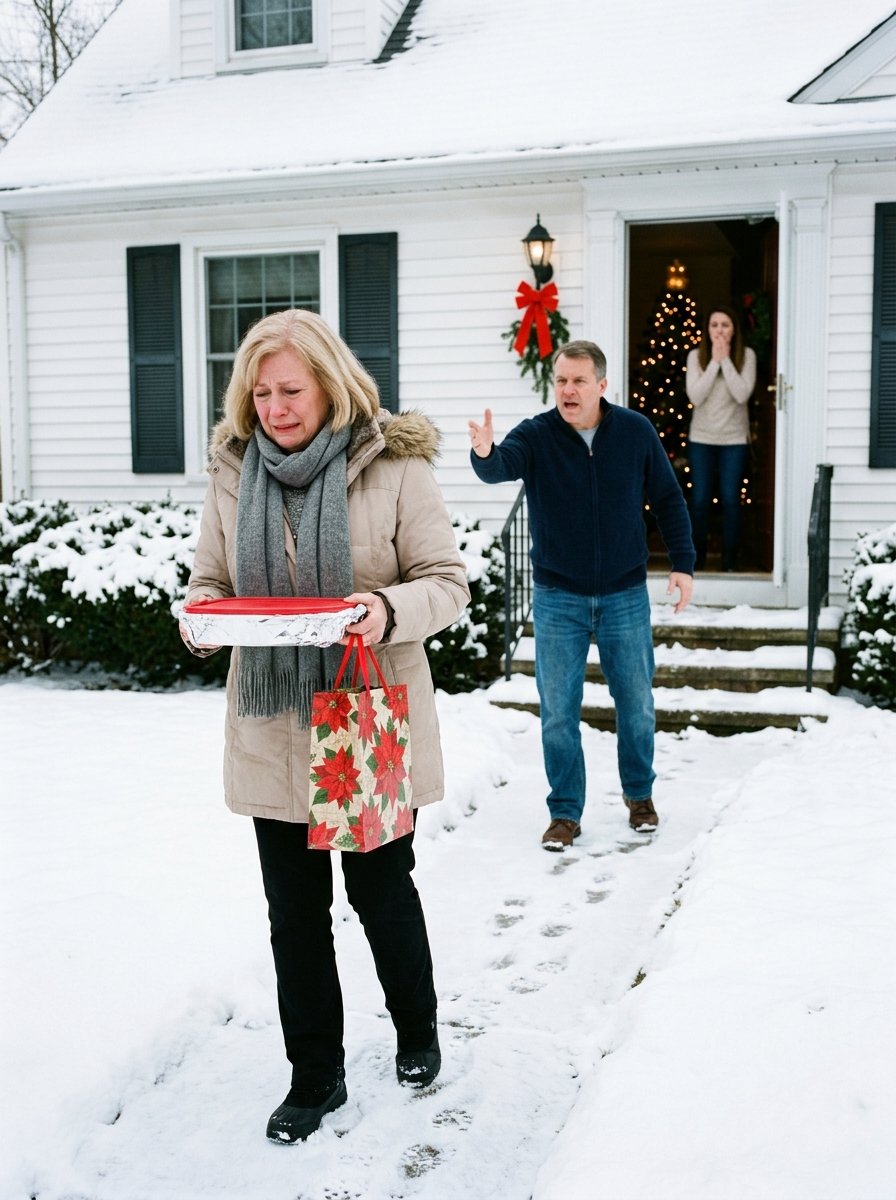
On Christmas Eve, I showed up at my son’s home with a homemade apple pie, still warm from the oven. I had spent the entire afternoon making it from scratch, using the same recipe my late husband had loved for forty-two years.
I thought I was bringing a little Christmas happiness to my family.
Instead, I discovered something that broke my heart.
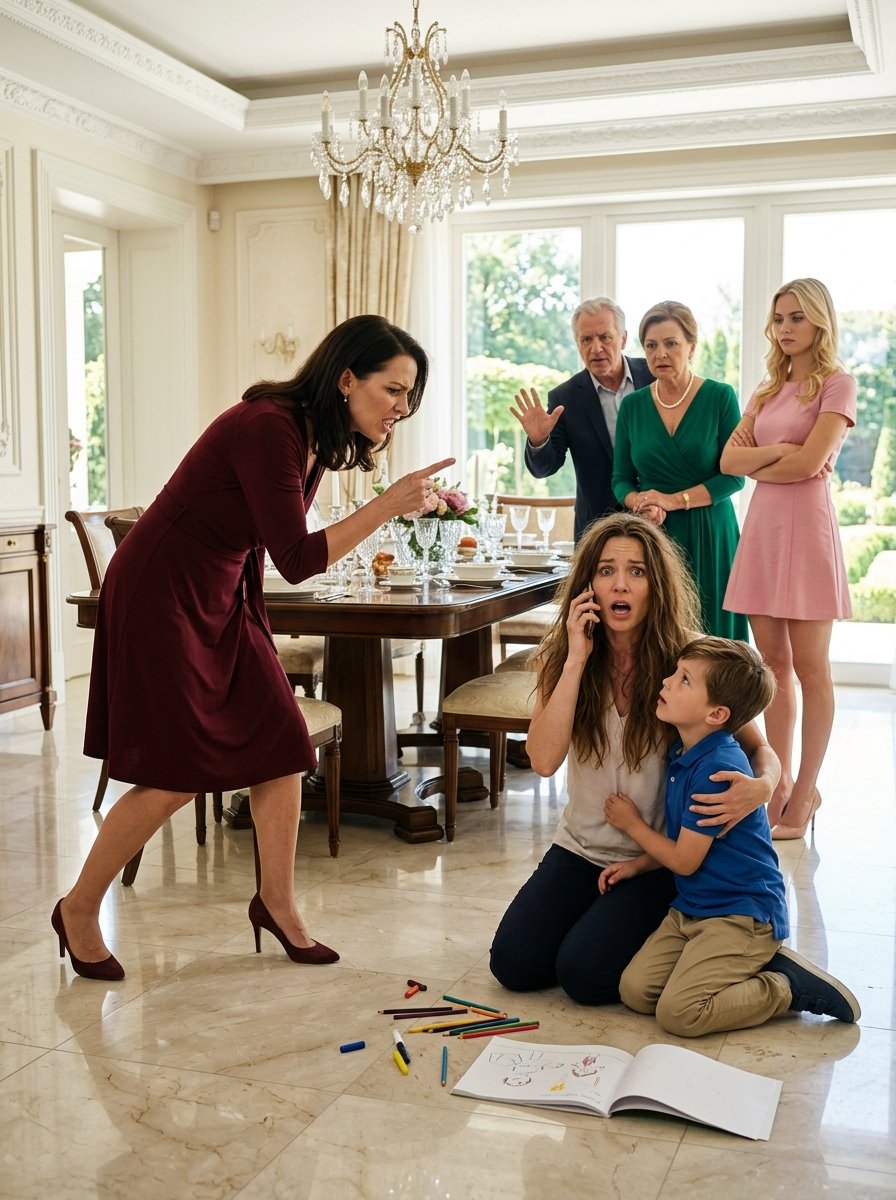
When my daughter-in-law opened the front door, she didn’t smile. She looked at the pie in my hands, then at my face.
“Margaret, what are you doing here?”
For a moment, I thought she was joking.
“I brought dessert,” I said, lifting the pie slightly. “I thought it might be nice to spend Christmas Eve with everyone.”
Her expression didn’t change.
“We already have dessert. And honestly, tonight really isn’t a good time.”
Behind her, I could hear Christmas music playing. Children were laughing. The smell of roasted turkey drifted into the cold December air.
Through the doorway, I could see a beautifully decorated dining table, surrounded by people.
There were at least twelve chairs.
But apparently, not one of them was meant for me.
My name is Margaret Wilson. I’m sixty-eight years old, and until that Christmas Eve, I believed that no matter how much life changed, family would always make room for one another.
I had been wrong.
My husband, Robert, passed away three years earlier after a sudden heart attack. We had been married for forty-two years, and together we raised our only son, Daniel.
Robert was the kind of father who never missed a baseball game, even when he had worked a twelve-hour shift. He taught Daniel how to ride a bicycle, change a tire, and treat people with respect.
And every Christmas, he insisted that I make my homemade apple pie.
“Christmas isn’t Christmas without your pie, Maggie,” he always said.
After he died, our house became painfully quiet.
The first Christmas without him, Daniel invited me to spend the holiday with his family. I remember sitting beside my granddaughter, Emma, watching her open presents while my grandson, Jacob, climbed into my lap.
For a few hours, the empty place in my heart didn’t hurt quite so much.
But things slowly changed.
The following year, Daniel said they wanted a quiet Christmas at home.
I understood.
Then came Mother’s Day, when he forgot to call until almost midnight.
Thanksgiving arrived, and I received a text saying they were spending the holiday with my daughter-in-law Lauren’s parents.
I told myself not to be sensitive.
Young families were busy. Children had school. Parents had jobs. I didn’t want to become the lonely mother who made everyone feel guilty.
So I stayed quiet.
I mailed birthday cards. I bought Christmas presents. I called occasionally, but when Daniel sounded rushed, I quickly ended the conversation.
And I waited for invitations that rarely came.
That December, I decided things needed to change.
A few days before Christmas, I called Daniel.
“Sweetheart, what are you doing Christmas Eve?”
There was a pause.
“Just having some people over, Mom. Nothing special.”
I smiled.
“Well, maybe I could stop by with a pie. Your dad would have wanted that.”
He hesitated.
“Let me talk to Lauren.”
I waited for him to call back.
He never did.
Looking back, I should have called again. I should have asked directly whether I was welcome.
But I was tired of feeling like an inconvenience.
And a small, foolish part of me believed that a mother shouldn’t need a formal invitation to see her son on Christmas Eve.
So I baked the pie.
I peeled eight apples, mixed the cinnamon and sugar, and rolled out the dough with Robert’s old wooden rolling pin.
While it baked, I placed his photograph on the kitchen counter.
“You think they’ll like it?” I whispered.
In the picture, Robert smiled back at me.
I wrapped the pie in a clean red dish towel, put on my best winter coat, and drove twenty-five minutes to Daniel’s house.
Every home along the street glowed with Christmas lights.
I remember feeling hopeful as I walked up his driveway.
That hope lasted less than thirty seconds.
After Lauren told me it wasn’t a good time, I tried to keep my voice steady.
“I won’t stay long. I just wanted to see the children.”
She folded her arms.
“Margaret, we’ve discussed this. We have our own family traditions now.”
I stared at her.
“Discussed what?”
Before she could answer, Daniel appeared behind her.
“Mom?”
His surprise was unmistakable.
“Why didn’t you call before coming?”
Those seven words hurt more than anything Lauren had said.
Because I had called.
And he knew it.
“I asked you about Christmas Eve,” I replied quietly.
He rubbed his forehead.
“I said I’d talk to Lauren.”
I looked past him toward the dining room.
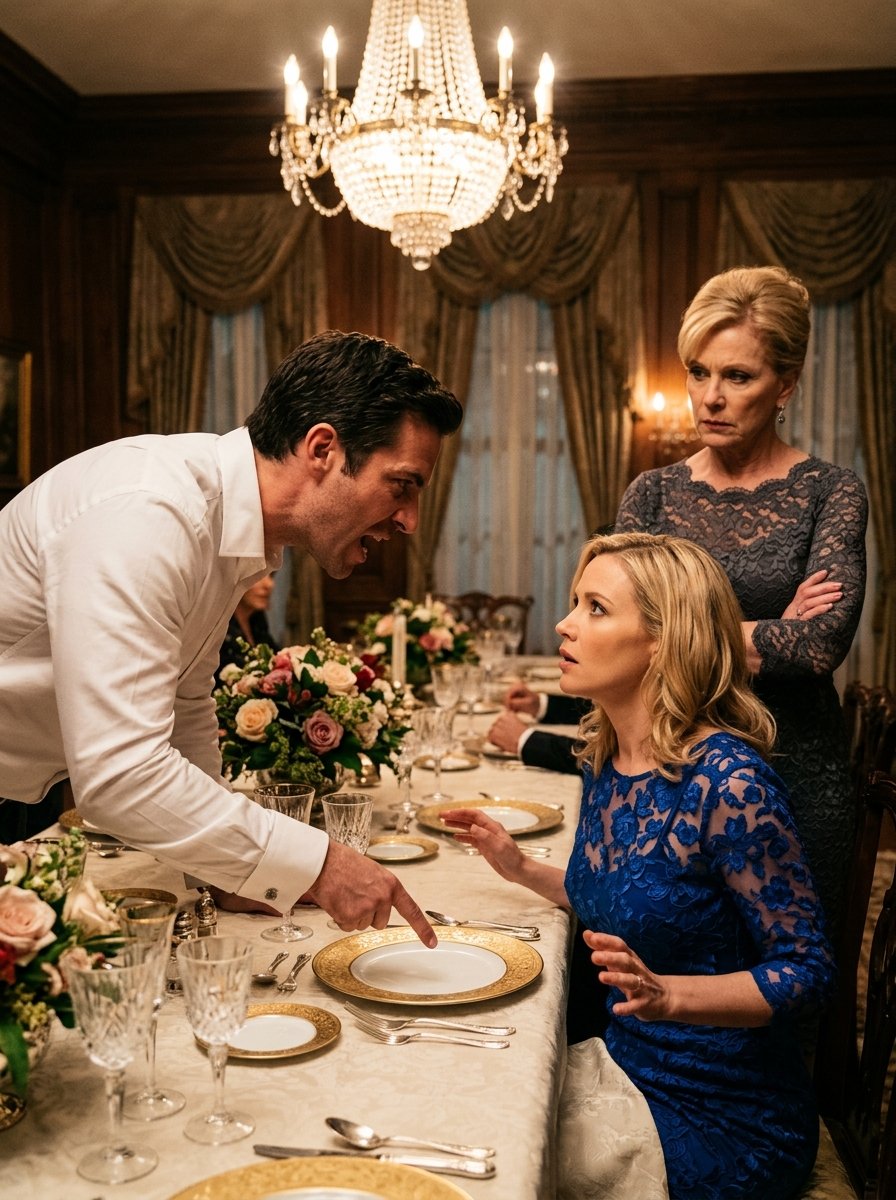
Lauren’s parents were sitting at the table. Her sister was there with her husband. Even two neighbors I recognized from previous visits had been invited.
Everyone seemed to belong.
Everyone except me.
I looked down at the pie.
“I see,” I whispered.
Then a small voice rang out from the hallway.
“GRANDMA!”
Emma, my nine-year-old granddaughter, came running toward me in her Christmas pajamas.
She threw her arms around my waist.
“Grandma! You’re here! Mommy said you were sick!”
The silence that followed was terrible.
I looked at Lauren.
Then at Daniel.
“Sick?” I repeated.
Lauren’s face turned red.
“I just told them you weren’t feeling up to celebrating this year.”
I felt something inside me go very still.
All those months of wondering why the children never asked to visit suddenly made sense.
They hadn’t forgotten me.
They thought I didn’t want to come.
Emma looked confused.
“But Grandma, are you better now? Can you stay? I saved you a cookie!”
I knelt down and brushed the hair away from her face.
“Oh, sweetheart. I’m perfectly fine.”
“Then you’re staying?”
I swallowed.
“I don’t think tonight is the right night, honey.”
Her smile disappeared.
“But it’s Christmas.”
I kissed her forehead.
“I know, baby.”
I stood up, placed the pie on the small table beside the doorway, and looked at my son.
“Daniel, I love you. But I will never again stand at your door and ask whether I belong inside.”
Then I turned and walked away.
I managed to reach my car before the tears came.
I sat behind the steering wheel while snow began falling against the windshield.
For several minutes, I couldn’t move.
I thought about the Christmas mornings when Daniel was little, how Robert and I would wake before sunrise just to see his face when he discovered the presents beneath the tree.
I remembered sewing his first Christmas costume when he was six, staying awake until two in the morning because we couldn’t afford to buy one.
And I remembered Robert holding our newborn grandson for the first time, tears running down his cheeks.
How had we gone from being the center of our son’s world to becoming someone who didn’t even deserve a chair at Christmas dinner?
A knock on my car window startled me.
Daniel stood outside without a coat.
I wiped my eyes and lowered the glass.
“Mom, please. Can we talk?”
I stared straight ahead.
“About what?”
He opened the passenger door and sat beside me.
For a moment, neither of us spoke.
Then he said something I hadn’t expected.
“I didn’t know Lauren told the kids you were sick.”
I turned toward him.
“But you knew I wasn’t invited.”
He lowered his head.
“Yes.”
That single word hurt, but at least it was the truth.
“Why, Daniel?”
He rubbed his hands together.
“Lauren says our holidays are stressful enough. Her parents expect certain things, the kids get overwhelmed, and she wanted to keep everything simple.”
I glanced toward the brightly lit house.
“Twelve people doesn’t look very simple.”
He said nothing.
“Your father and I never had much money,” I continued. “But we always made room for people. Remember Mr. Thompson, the neighbor who lived alone? Your dad invited him every Christmas because he couldn’t stand the thought of someone eating dinner by himself.”
Daniel nodded slowly.
“And now his own wife is sitting alone on Christmas Eve.”
He covered his face.
“Mom, I’m sorry.”
I wanted to tell him it was all right.
That was my habit. For forty years, whenever my son made a mistake, I tried to soften the consequences.
But this time, I couldn’t.
“An apology doesn’t change what happened,” I said. “And this isn’t only about Lauren. You’re my son. You knew I was alone, and you allowed this.”
Tears filled his eyes.
“I know.”
I took a long breath.
“I don’t need to be included in every dinner or every holiday. I understand you have your own life. But I deserve honesty, Daniel. If you don’t want me there, tell me yourself. Don’t let the children believe their grandmother doesn’t love them enough to visit.”
He began crying.
I hadn’t seen my grown son cry since his father’s funeral.
“I’ve been a terrible son,” he whispered.
“You’ve been an absent one,” I replied. “But you still have time to change that.”
He reached for my hand.
“Please come inside.”
I looked at him for a long moment.
Then I shook my head.
“Not tonight.”
His face fell.
“I need to go home,” I said. “And you need to go inside and tell your children the truth.”
I started the engine.
Before leaving, I added, “Your father would have been disappointed, Daniel. Not because you made a mistake, but because you waited so long to admit it.”
I drove home slowly.
That night, I made a cup of tea, cut myself a slice from the second little pie I’d baked, and sat beside Robert’s photograph.
For the first time in years, I didn’t pretend I was fine.
I cried.
But I also made myself a promise.
I would never stop loving my family.
And I would never again confuse loving them with accepting disrespect.
At nine o’clock on Christmas morning, my doorbell rang.
When I opened it, Daniel stood on the porch with Emma and Jacob. Lauren was behind them, holding a small paper bag.
Emma ran straight into my arms.
“Grandma! Daddy told us you weren’t sick! He said there was a big misunderstanding.”
Jacob grabbed my hand.
“And we brought you presents!”
I looked at Daniel.
He didn’t smile. He simply said, “Mom, can we come in?”
I stepped aside.
We sat around my old kitchen table, the same table where Daniel had done his homework as a boy.
Lauren spoke first.
“Margaret, what I did was wrong. I was trying to control everything about Christmas, and I made you feel unwelcome. I’m sorry.”
Her voice shook.
I could tell the apology wasn’t easy.
I appreciated it, but I didn’t pretend everything was suddenly fixed.
“Thank you for saying that,” I replied. “What matters now is what happens afterward.”
Daniel nodded.
“We want to do better.”
Then Emma opened the paper bag.
Inside was the pie plate I’d left at their house.
It was empty.
Jacob grinned.
“Daddy ate two slices. He cried while he was eating!”
Daniel laughed through his tears.
“It tasted exactly like Dad remembered it.”
I smiled.
“He always loved that pie.”
Daniel looked at the photograph of Robert hanging beside the kitchen window.
“I miss him, Mom.”
“So do I, sweetheart.”
He reached across the table and took my hand.
“And I’m sorry I made you miss your family while we were still here.”
That was when I finally began to cry again.
Not because everything was perfect.
But because, for the first time in a long while, I felt heard.
We spent Christmas morning together in my little kitchen. Emma helped me make pancakes. Jacob spilled orange juice across the table. Daniel washed the dishes, and Lauren stayed to help clean.
Nothing about that morning was fancy.
There were no expensive decorations or perfectly arranged place settings.
But there was laughter.
There was honesty.
And there was room for everyone.
Over the following months, Daniel began calling every Sunday. Sometimes we talked for five minutes. Sometimes we talked for an hour.
Lauren started inviting me to the children’s school events. I attended Emma’s spring concert and Jacob’s soccer games.
We still had disagreements. There were occasional awkward moments. Rebuilding trust took time.
But they kept showing up.
And so did I.
The following Christmas Eve, I received an invitation from Daniel three weeks early.
He didn’t send a text.
He came to my house personally.
“Mom,” he said, “we’re having Christmas dinner this year. Everyone’s coming. And there’s one seat I want to make sure is filled.”
He handed me a little card Emma had decorated with red and green crayons.
On the front were the words:
RESERVED FOR GRANDMA.
Inside, in Emma’s uneven handwriting, was a message I’ll treasure for the rest of my life.
“Christmas is better when you’re here.”
That Christmas Eve, I walked into my son’s home carrying another homemade apple pie.
But this time, I didn’t have to wonder whether I belonged.
Emma opened the door before I could ring the bell.
Jacob took my coat.
Lauren hugged me.
And Daniel pulled out the chair beside his own.
At dinner, he stood and raised his glass.
“I want to make a toast,” he said.
He looked at me.
“Last Christmas, I nearly lost something I should never have taken for granted. My mother taught me that family isn’t just about sharing a last name. It’s about making people feel loved, especially when they need it most.”
His voice cracked.
“And I promise I won’t forget that again.”
I glanced at the empty place in my heart where Robert would always live.
For a moment, I could almost hear him saying, “See, Maggie? There was always room for one more.”
I looked around the table at the people I loved.
And I finally understood something.
Sometimes, the greatest gift we can give our children isn’t another sacrifice or another excuse for their mistakes.
Sometimes it’s the courage to tell them when they’ve hurt us, and the grace to let them make things right.
Because growing older doesn’t mean becoming invisible. And being a mother doesn’t mean you stop deserving respect.
That Christmas, the apple pie disappeared before anyone finished their coffee.
But the sweetest thing I took home wasn’t a compliment about my baking.
It was the knowledge that my family had finally learned what Robert and I had tried to teach our son all those years ago.
Love isn’t measured by how beautiful your Christmas table looks.
It’s measured by whether the people who love you have a place to sit.
And this time, I had mine.
THE END.